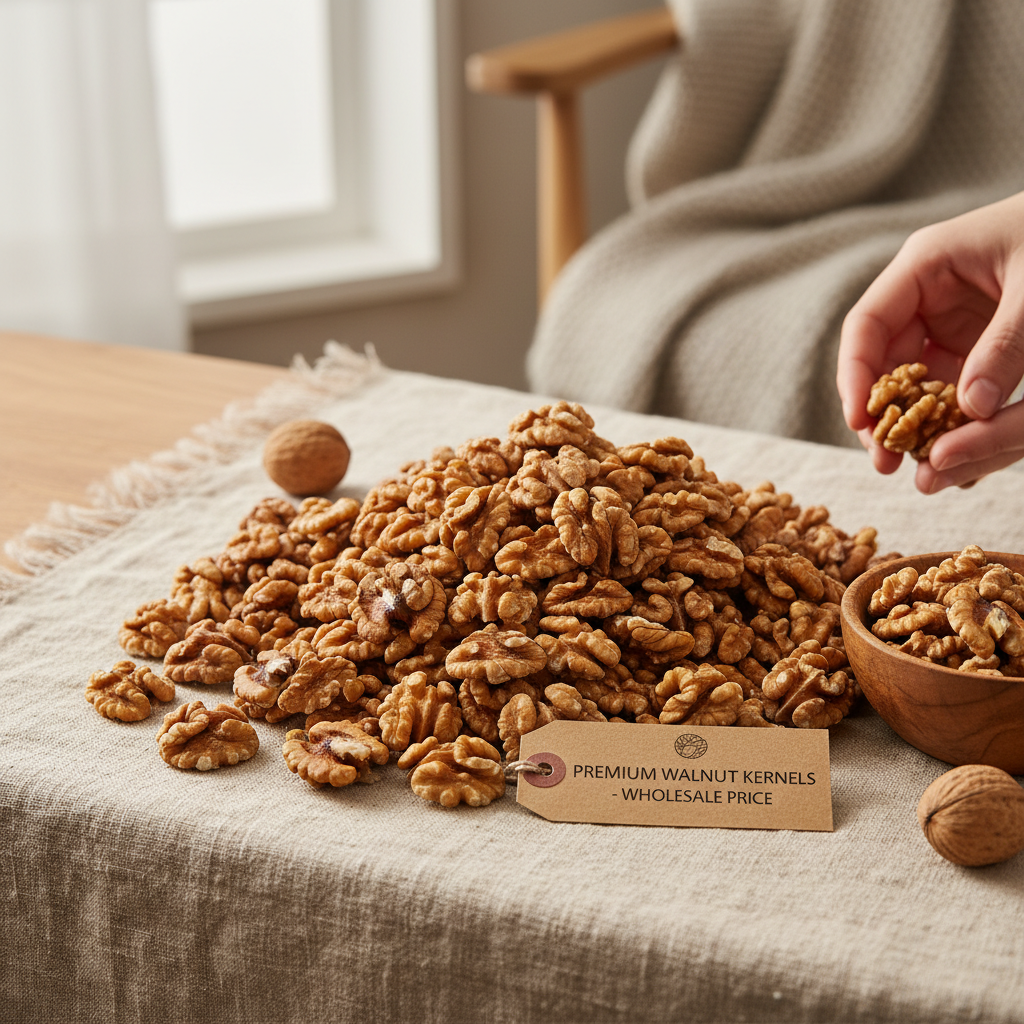
Understanding the 100g walnuts price is essential for both health-conscious consumers and industrial food manufacturers who seek to optimize their nutritional intake and production costs. In the global market, walnuts are prized for their dense nutrient profile, and establishing a standard price per 100 grams allows for precise budgetary control and dietary tracking.
From a commercial perspective, the 100g walnuts price serves as a critical benchmark for evaluating the cost-efficiency of different grades, such as whole halves versus broken kernels. As supply chains fluctuate due to crop yields in regions like China, having a clear understanding of this metric helps businesses maintain stable margins while delivering high-quality products to their customers.
Whether you are a bakery owner sourcing bulk ingredients or a nutritionist recommending daily servings, analyzing the 100g walnuts price ensures that you are getting the best value for these brain-boosting superfoods.
Global Market Dynamics of 100g Walnuts Price
The global trade of walnuts is influenced by seasonal harvests and the geographic concentration of high-yield varieties. The 100g walnuts price often fluctuates based on the output from primary exporting nations, including China, where professional factories like Hebei Luhua integrate planting bases with export capabilities to stabilize costs.
By maintaining year-round inventory and utilizing BRC-certified quality systems, manufacturers can mitigate the volatility of the 100g walnuts price. This stability is crucial for international importers who require consistent pricing to maintain their retail and wholesale commitments across different continents.
Defining Value in 100g Walnuts Price
In simple terms, the 100g walnuts price represents the unit cost of a standard nutritional serving of walnut kernels. This metric is not just about the monetary cost but encompasses the quality of the nut, its color grade (from Extra Light to Amber), and the processing method used to extract the kernel from the shell.
From an industrial standpoint, this pricing unit allows food manufacturers to calculate the exact cost of adding a specific amount of nutty texture to a recipe. Whether it is a 100g addition to a batch of artisanal bread or a precise measurement for a health supplement, this benchmark ensures transparency in B2B transactions.
Furthermore, the value is tied to the certification of the source. A price derived from a BRC-certified factory reflects an investment in hygiene, safety, and scientific quality management, which reduces the risk of contamination and increases the overall value proposition for the buyer.
Core Factors Influencing 100g Walnuts Price
One of the most significant drivers of the 100g walnuts price is the visual grade of the kernel. "Extra Light Halves" (ELH) command a premium due to their aesthetic appeal in retail packaging, whereas "Amber Pieces" (AP) are more affordable, making them ideal for internal fillings where visual perfection is secondary to taste.
Processing and packaging also play a pivotal role; for instance, vacuum packaging in 10kg or 12.5kg increments helps preserve the omega-3 fatty acids, which justifies a stable 100g walnuts price by extending the shelf life up to 24 months and preventing oxidation.
Lastly, the source of the walnuts—such as whether they come from a dedicated planting base or a third-party trader—affects the 100g walnuts price. Direct factory sourcing eliminates intermediaries, allowing for more competitive pricing and the ability to offer OEM/ODM customization without excessive markups.
Cost-Efficiency of Different Walnut Grades
Choosing between whole kernels and broken pieces is a strategic decision that directly impacts the 100g walnuts price for a business. Broken kernels, resulting from the natural shelling process, offer a significantly lower price point while retaining the same nutritional value, making them the most cost-effective choice for industrial bakeries.
While whole halves are the "gold standard" for luxury gift sets, the use of "Light Pieces" (LP) or "Mixed Crumbs" (SMALLEST) allows manufacturers to reduce their raw material expenditure without compromising the flavor or heart-healthy benefits of the product.
Comparative Value Rating by Grade (Based on 100g Walnuts Price)
Industrial Applications and Pricing Logic
In the confectionery and baking industries, the 100g walnuts price is calculated based on the intended use of the nut. For instance, "Light Pieces" (LP) are approximately one-eighth of a kernel, providing a uniform texture that is ideal for cookies and brownies, where a consistent crunch is required across the entire product.
Conversely, "Mixed Crumbs" are the most finely chopped and are often utilized in cereal production or as fillings for breads. Because these grades require less aesthetic sorting, they offer the lowest 100g walnuts price, providing a high ROI for large-scale manufacturers who process thousands of kilograms daily.
Long-Term Value and Health ROI
When analyzing the 100g walnuts price from a health perspective, the "Return on Investment" is measured in cognitive and cardiovascular benefits. A daily intake of 7 to 10 walnut halves—roughly a small handful—provides the necessary alpha-linolenic acid (ALA) to support brain cell structure and reduce inflammation.
For consumers on a budget, purchasing broken walnut kernels is the most sustainable way to maintain this habit. Since the nutritional profile remains identical to whole nuts, the lower 100g walnuts price of broken grades allows for consistent, long-term consumption, which is essential for neuroprotective effects and memory improvement.
Additionally, the presence of magnesium and antioxidants like Vitamin E makes the cost of a 100g serving a modest investment in overall wellness, potentially reducing the risk of cognitive decline and supporting heart health by lowering triglycerides.
Future Trends in Nut Pricing and Sourcing
The future of the 100g walnuts price will likely be driven by digital transformation and a shift toward sustainable, traceable sourcing. Automation in the sorting process is allowing factories to create more precise grade separations, which may lead to more granular pricing tiers based on exact particle size and color luminosity.
Sustainability initiatives and the move toward "green" certifications are also expected to influence pricing. Buyers are increasingly willing to pay a slight premium for walnuts that are sourced from planting bases with audited environmental impacts, shifting the focus from the lowest 100g walnuts price to the "most ethical" price.
Furthermore, the rise of personalized nutrition may lead to specialized walnut blends—combining different grades for specific texture and nutritional goals—which will create new pricing models in the B2B and B2C markets.
Comparison of Walnut Kernel Grades and Commercial Value
| Grade Type |
Visual Quality |
Primary Use Case |
100g Walnuts Price Level |
| Extra Light Halves |
Premium / High |
Luxury Retail / Gifts |
Highest |
| Light Quarters |
Good / Uniform |
Salads / Cereals |
Medium-High |
| Light Pieces (LP) |
Moderate / Crushed |
Pastries / Baking |
Medium-Low |
| Mixed Crumbs |
Low / Fine |
Fillings / Industrial |
Lowest |
| Amber Halves |
Standard / Darker |
General Consumption |
Medium |
| Amber Pieces |
Low / Irregular |
Chocolate / Ice Cream |
Low |
FAQS
The price variation is primarily due to aesthetic value and labor. Whole halves are sorted more strictly for high-end retail markets, whereas broken pieces are a natural byproduct of the shelling process. Since broken kernels are more convenient for industrial baking and fillings, they are offered at a lower price without any loss in nutritional quality or taste.
Yes, absolutely. The 100g walnuts price for broken kernels is lower only because of their shape, not their content. They contain the same levels of omega-3 fatty acids, magnesium, and antioxidants as whole halves, making them a budget-friendly way to support brain and heart health.
The best way to optimize costs is to source directly from a factory that integrates planting and trade. By choosing grades like "Light Pieces" (LP) or "Mixed Crumbs," you eliminate the need for further chopping and benefit from a lower unit price while maintaining high-quality standards certified by BRC.
Vacuum packaging adds a small amount to the processing cost but provides significant long-term value. It prevents the delicate omega-3 oils from oxidizing, extending the shelf life to 24 months. This ensures that the price you pay for 100g of walnuts yields the maximum nutritional benefit over time.
For brain health, it is generally recommended to eat about 7 to 10 walnut halves daily, which is roughly 28-30 grams. This means a 100g purchase provides approximately 3 days of optimal nutritional support for cognitive function and memory.
To maintain the quality associated with your 100g walnuts price, store kernels in airtight containers in a cool, dry place. For maximum freshness and to prevent rancidity of the natural oils, refrigeration is highly recommended, especially for broken kernels which have more surface area exposed to air.
Conclusion
Analyzing the 100g walnuts price reveals that the true value of this superfood lies in the balance between grade, application, and nutritional ROI. From the premium appeal of Extra Light Halves to the cost-efficiency of Mixed Crumbs, understanding these dynamics allows both businesses and consumers to maximize their health outcomes while optimizing their budgets.
As the industry moves toward greater transparency and sustainability, sourcing from BRC-certified factories with direct planting bases will become the gold standard. We encourage you to evaluate your specific needs—whether for industrial production or personal wellness—and choose the walnut grade that offers the best economic and nutritional value. Visit our website for premium sourcing: www.luhuawalnut.com