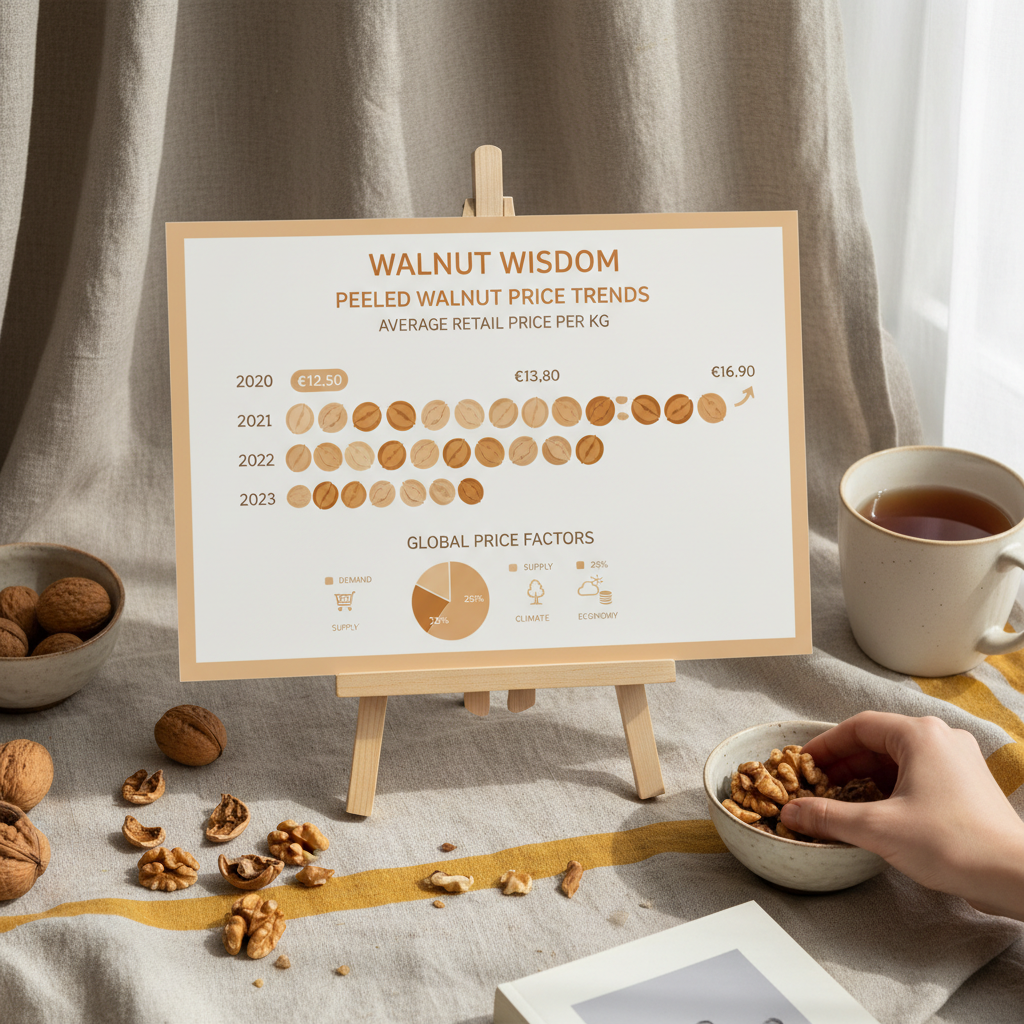
The global nut market is currently witnessing a significant shift toward premium, high-yield varieties, where the paper shell walnut price serves as a critical benchmark for importers and wholesalers. As consumers increasingly prioritize convenience and nutritional density, the demand for thin-shelled walnuts that offer easier access to the kernel without compromising quality has surged across international borders.
Understanding the dynamics behind the paper shell walnut price requires an analysis of both agricultural yield and processing precision. Factors such as shell thickness, kernel color, and moisture content directly influence the market value, making it essential for B2B buyers to source from factories that integrate planting bases with advanced screening technology to ensure consistency.
For professionals in the food processing industry, securing a competitive paper shell walnut price depends on identifying suppliers with BRC certification and a proven track record of mass production. By focusing on high-yield varieties like the Xinjiang Paper Shell, businesses can optimize their profit margins while delivering a superior product to the end consumer.
Global Market Dynamics of Paper Shell Walnut Price
The international trade of walnuts is heavily influenced by the balance between supply from major producing regions like Xinjiang and the demand from luxury health-food markets. The paper shell walnut price fluctuates based on the harvest's overall quality, with "thinest shell" varieties commanding a premium due to their ease of opening by hand and higher kernel-to-shell ratio.
From a commercial standpoint, the ability to provide consistent sizing (such as 30mm+ or 32mm+) and low moisture levels (below 5%) is what separates industrial-grade products from premium exports. This stability in quality ensures that the paper shell walnut price remains resilient even during market volatility.
Defining the Value of Thin-Shell Walnuts
In the nut processing industry, a "paper shell" walnut refers to a variety specifically bred or selected for an exceptionally thin outer shell. This characteristic is not merely a convenience for the consumer; it is a primary driver of the paper shell walnut price because it increases the actual yield percentage, often reaching between 60% and 65% for top-tier Xinjiang varieties.
The value proposition lies in the efficiency of the product. When a walnut can be opened with one hand, it increases consumer appeal in the retail sector, allowing brands to market the product as a "premium snack." Consequently, the price is tied to the "opening experience" and the visual whiteness of the kernel inside.
Furthermore, the integration of factory trade—where the producer also manages the export—reduces intermediary costs. This allows a professional factory like Hebei Luhua to maintain a competitive paper shell walnut price while adhering to strict BRC quality system certifications.
Key Factors Influencing the Paper Shell Walnut Price
One of the most significant drivers of the paper shell walnut price is the yield percentage. A higher yield means less waste during the shelling process and more sellable kernel per kilogram of raw product, which logically increases the wholesale value.
Another critical factor is the aesthetic and physical quality of the shell. A "white and smoothly shell" combined with a large size (e.g., 37mm+) creates a high-end perception in markets like Europe and the Middle East, directly pushing the paper shell walnut price upward.
Finally, the technical processing—including machine screening to remove non-compliant items and machine blowing to eliminate empty shells—ensures that the buyer is paying for actual nut content. This rigorous quality control justifies a stable and premium paper shell walnut price.
Technical Specifications and Yield Analysis
Analyzing the technical data reveals a clear correlation between shell thickness and market positioning. For instance, the 185 Thin-shell Walnut is prized for its unique thinness and top white kernel, maintaining a yield of 51%-53%. This technical superiority allows it to maintain a higher price point than standard walnuts.
Comparing different grades, such as the Xinfeng variety which offers a "competitive price" with a 47%-50% yield, shows how buyers can balance cost and quality based on their specific market needs. The following data illustrates the relative performance and value ratings of various thin-shell options.
Comparison of Paper Shell Walnut Price Value Metrics
Global Applications and Export Regions
The demand for thin-shell walnuts extends far beyond domestic borders, with the 185 variety being particularly successful in the Middle East, Europe, America, and Asia. In these regions, the paper shell walnut price is influenced by local health trends and the preference for nuts that are easy to process for confectionery or direct consumption.
Professional export factories utilize mature logistics channels to ensure that the high-quality kernels reach their destination without spoilage. By offering OEM/ODM customization and label services, manufacturers can help international partners justify the premium paper shell walnut price through enhanced branding and packaging.
Long-Term Value and Quality Assurance
Long-term value in the walnut trade is built on trust and certification. A factory that has passed provincial BRC quality system certification provides an inherent guarantee that the paper shell walnut price reflects a product free from contaminants and consistent in grade.
The integration of a complete and scientific quality management system—from the planting base to the automatic sealing line—minimizes risk for the buyer. When a supplier can guarantee year-round inventory and on-time delivery, the reliability adds an intangible value to the quoted paper shell walnut price.
Furthermore, the use of professional production lines to remove empty shells and non-compliant fruits ensures that the customer receives the maximum amount of edible kernel. This transparency in the production process is what sustains a loyal global client base across 100 countries and regions.
Storage Solutions for Price Preservation
Proper storage is the final link in maintaining the economic value of the product. Since walnuts contain healthy oils that can go rancid, failing to protect them from heat, light, and moisture can lead to spoilage, effectively destroying the investment represented by the paper shell walnut price.
For walnuts in their shells, a breathable container such as a mesh bag or paper bag is recommended to prevent moisture trapping, which can lead to mold. By keeping the nuts in a cool, dry, and well-ventilated area, or utilizing refrigeration for mid-term storage (up to six months), the freshness and crunch are preserved.
Ultimately, the longevity of the product determines the realized paper shell walnut price at the retail level. Freezing can extend the shelf life to over a year, provided the nuts are well-sealed to prevent odor absorption, ensuring that the nutritional benefits and flavor remain intact.
Comparison of Walnut Varieties and Their Value Dimensions
| Variety Name |
Yield Range |
Key Feature |
Price Position |
| Xinjiang Paper Shell |
60%-65% |
Thinest shell, one-hand open |
Premium High |
| Xin 2 Thin-shell |
52%-55% |
White smooth shell, best taste |
High |
| 33 Thin-shell |
48%-51% |
Best outward appearance |
Mid-High |
| Xinfeng Thin-shell |
47%-50% |
Big size, competitive cost |
Competitive |
| 185 Thin-shell |
51%-53% |
Top white kernel |
Premium Mid |
| Standard Walnut |
Below 45% |
Thicker shell, variable size |
Budget |
FAQS
The most influential factors are the yield percentage (kernel weight vs shell weight), the shell thickness, the kernel's color (whiteness), and the overall size (e.g., 30mm+). Varieties with higher yields and thinner shells, such as the Xinjiang Paper Shell (60-65% yield), naturally command a higher price due to their premium quality and consumer convenience.
Shell thickness directly impacts the "opening experience." Products described as "can open by one-hand" are highly valued in retail markets, allowing for higher margins. From a processing view, thinner shells mean a higher percentage of edible product per unit of weight, which justifies a premium paper shell walnut price compared to traditional varieties.
Yes, grades vary by yield and size. For example, the Xinjiang Paper Shell offers the highest yield (up to 65%), while the Xinfeng variety focuses on big size and competitive pricing with a 47-50% yield. The 185 variety is noted for its unique thin shell and superior white kernels, catering to different market segments.
To ensure a fair price, you should verify the factory's certifications (like BRC), check the moisture content (should be below 5%), and confirm the yield percentage. Sourcing directly from a factory that integrates planting and trade, like Hebei Luhua, removes middleman markups and ensures the price aligns with the actual product grade.
Absolutely. Walnuts contain oils that can go rancid if exposed to heat, light, and moisture. Proper storage in breathable containers or refrigeration (up to 6 months) and freezing (up to a year) prevents spoilage. Maintaining quality is essential to preserving the investment made in the initial paper shell walnut price.
Yes, professional export factories provide OEM and ODM customization services. This includes label customization and packaging customization, which allow you to brand the product for your local market, thereby adding value to the paper shell walnut price for your end customers.
Conclusion
In summary, the paper shell walnut price is a multifaceted metric that reflects the intersection of agricultural excellence, technical processing, and strategic logistics. From the high-yield Xinjiang Paper Shell to the competitively priced Xinfeng variety, the value is driven by the yield percentage, kernel quality, and the ease of access provided by a thin shell. By prioritizing BRC-certified factories with integrated planting bases and scientific quality control, buyers can ensure they receive a product that justifies its market price.
Looking forward, the trend toward healthier, more convenient superfoods will likely continue to drive the demand for premium thin-shell walnuts. For businesses looking to expand globally, investing in high-yield varieties and implementing rigorous storage protocols will be key to maintaining profitability and consumer trust. We invite you to explore our professional production lines and a variety of high-quality walnut options. Visit our website: www.luhuawalnut.com