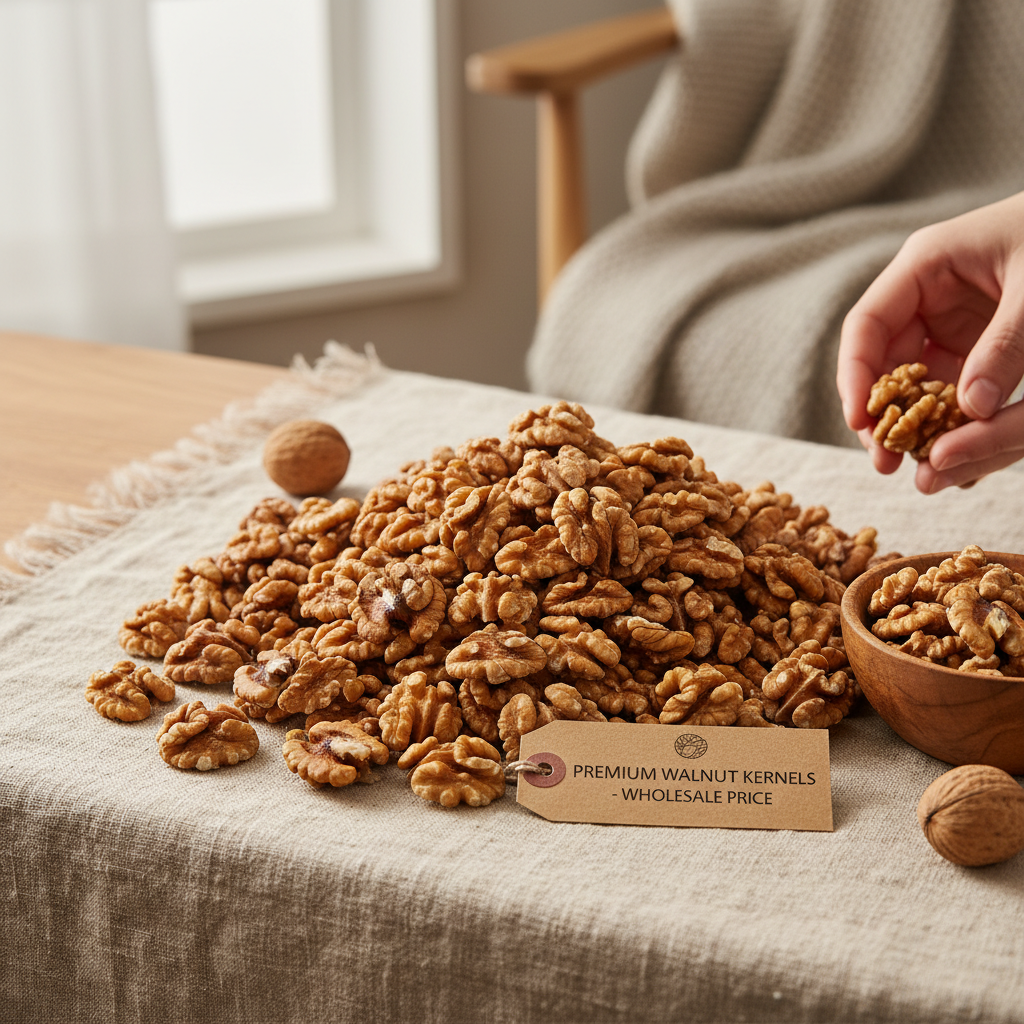
Understanding the market dynamics of premium nuts often begins with analyzing the walnut 100 gm price, a metric that helps consumers and small-scale distributors gauge the value of high-quality kernels. In the global agricultural trade, such a precise measurement serves as a benchmark for comparing different grades, from extra light halves to amber pieces, ensuring that buyers receive optimal nutritional value for their investment.
The fluctuation of the walnut 100 gm price is influenced by various factors, including harvest yields in China, international shipping costs, and the rigorous BRC quality certifications that top-tier factories maintain. For those sourcing for health-conscious retail packs, these small increments in pricing reflect the difference between standard processing and advanced vacuum-sealed packaging that preserves Omega-3 fatty acids.
Whether you are a confectionery manufacturer or a health enthusiast, keeping an eye on the walnut 100 gm price allows for better budget forecasting and procurement strategies. By focusing on the quality-to-price ratio, buyers can secure premium kernels that offer the perfect balance of taste, color, and nutritional density.
Global Market Drivers of Walnut Pricing
The global trade of walnut kernels is a complex ecosystem where the walnut 100 gm price acts as a microscopic reflection of macroscopic economic trends. From the planting bases in China to international ports, the price is dictated by harvest volumes and weather patterns. When climate conditions are favorable, the supply of Light Halves (LH) increases, potentially stabilizing the cost for retail-sized portions.
Furthermore, the integration of factory-trade models, such as those employed by Hebei Luhua, allows for a more streamlined transition from the grove to the consumer. By eliminating unnecessary intermediaries, the volatility of the walnut 100 gm price is reduced, providing distributors with a more predictable cost structure for their OEM and ODM packaging needs.
Defining Value in Small-Scale Walnut Units
When we discuss the walnut 100 gm price, we are essentially talking about the unit value of a highly nutrient-dense superfood. This small measurement is particularly relevant for the retail sector, where consumers often purchase nuts in 100g or 1kg packs for daily consumption. The value is not just in the weight, but in the specification—whether the pack contains Extra Light Halves (ELH) or Amber Pieces (AP).
From an industrial perspective, calculating the price per 100 grams helps manufacturers determine the cost-effectiveness of their ingredients. For instance, a bakery using Light Quarters (LQ) for a premium cake will use this metric to ensure their production costs remain competitive while maintaining the high-end sensory profile of the product.
Moreover, this pricing unit connects the raw commodity market to the health-food industry. As demand for plant-based proteins and Omega-3 fatty acids rises, the perceived value of a 100g serving increases, shifting the focus from simple bulk pricing to "value-per-nutrient" analysis.
Core Factors Influencing Kernel Grade Costs
The primary driver of the walnut 100 gm price is the color grading of the kernels. Extra Light Halves (ELH) are the most sought-after due to their aesthetic appeal and mild taste, which commands a premium price compared to Amber or Mixed Crumbs. The lighter the color, the higher the market value typically is.
Certification also plays a pivotal role; a BRC-certified factory ensures that the walnut 100 gm price includes the cost of strict quality management and food safety. This certification guarantees that the kernels are free from contaminants and processed using advanced technology, adding an invisible but essential layer of value for international importers.
Finally, the packaging method—whether it is standard bulk or vacuum-packed 2x5kg options—impacts the final walnut 100 gm price. Vacuum packaging extends the shelf life up to 24 months, reducing waste and justifying a slight increase in the unit cost for those prioritizing freshness and long-term storage.
Industrial Applications and Cost Efficiency
In the food processing industry, selecting the right kernel specification is key to balancing quality and cost. While the walnut 100 gm price for whole halves might be higher, the efficiency they provide in presentation for gourmet snacks often offsets the cost. Conversely, Light Pieces (LP) offer a more economical route for fillers in granola or energy bars without sacrificing nutritional integrity.
For large-scale buyers, the transition from retail-style pricing to bulk procurement is where the most significant savings occur. By sourcing directly from a factory that integrates planting and trade, businesses can lock in stable prices that protect them from the seasonal spikes often seen in the retail walnut 100 gm price.
Comparative Analysis of Walnut Grade Value
Advantages of Wholesale Sourcing for Retail
For brands looking to launch their own line of healthy snacks, sourcing in bulk and then partitioning into retail units allows them to optimize the walnut 100 gm price. By leveraging OEM/ODM customization services, companies can create a premium brand identity while maintaining a lean supply chain, ensuring that the end consumer receives a high-quality product at a fair price.
The ability to customize labels and packaging directly at the source factory further enhances this advantage. Instead of paying for multiple stages of repackaging, which would inflate the walnut 100 gm price, brands can ship ready-to-sell units from the factory, significantly improving their profit margins and reducing the carbon footprint associated with transport.
Future Trends in Nut Processing and Logistics
The future of the industry is leaning heavily toward sustainability and digital transparency. We expect to see blockchain integration in the supply chain, allowing a consumer to scan a pack and see the origin of the kernels, which will likely create a new "transparency premium" added to the walnut 100 gm price.
Automation in sorting and grading is also evolving. New AI-driven optical sorters can distinguish between Light Halves and Light Amber Halves with near-perfect accuracy. This precision reduces waste and ensures that the walnut 100 gm price is strictly tied to the actual grade of the nut, eliminating the risk of "mixed" grade under-delivery.
Additionally, the shift toward organic certification is expanding. As more growers move away from synthetic pesticides, the demand for organic walnut halves will grow. This shift will create a bifurcated market where organic options carry a higher walnut 100 gm price, catering to a niche but rapidly expanding health-conscious demographic.
Strategic Buying Guide for Importers
Successful importing requires a deep understanding of seasonal cycles. Buying during peak harvest usually results in a more stable walnut 100 gm price, whereas off-season procurement can lead to premiums. Importers should establish long-term partnerships with factories that maintain year-round inventory to ensure a steady supply regardless of the season.
Evaluating the "yield value" is also critical. A shipment of high-percentage intact halves provides more retail value than a shipment with high breakage. When analyzing the walnut 100 gm price, one must consider the percentage of broken kernels, as high breakage increases the cost of manual sorting and lowers the final retail value.
Finally, focus on the logistics channel. Mature logistics channels reduce the risk of moisture ingress and oxidation. Since walnuts are sensitive to environmental changes, a slightly higher walnut 100 gm price from a supplier with superior logistics is often cheaper in the long run than a low-cost option that results in spoiled cargo.
Analysis of Walnut Kernel Grades and Their Commercial Impact
| Kernel Grade |
Color Profile |
Market Demand |
Price Impact (1-10) |
| Extra Light Halves |
Creamy White |
Very High |
10 |
| Light Halves |
Pale Gold |
High |
8 |
| Light Quarters |
Pale Gold |
Moderate |
7 |
| Light Amber Halves |
Golden Brown |
Moderate |
6 |
| Amber Pieces |
Deep Amber |
Industrial |
5 |
| Mixed Crumbs |
Varied |
Industrial |
4 |
FAQS
Color is a primary indicator of quality and preference. Extra Light kernels are more aesthetically pleasing for high-end retail and baking, which drives higher demand and consequently a higher walnut 100 gm price. Amber kernels, while nutritionally identical, are often used in industrial processing where appearance is less critical, resulting in a more economical price point.
Yes, typically organic walnuts command a premium. This is due to the stricter farming requirements, the absence of synthetic pesticides, and the more rigorous certification process. For health-conscious brands, this higher walnut 100 gm price is justified by the "clean label" appeal and the sustainable production methods used.
Buying in bulk (e.g., 10kg or 12.5kg vacuum packs) significantly lowers the walnut 100 gm price by reducing packaging overhead and shipping costs per unit. For businesses, this allows for higher margins when repackaging into retail sizes or using the kernels as ingredients in large-scale food production.
Vacuum packaging adds a small cost to the production process but provides immense value by extending the shelf life to 24 months. When analyzing the walnut 100 gm price, vacuum-packed options reduce the risk of rancidity, ensuring that the product remains fresh and nutritious for much longer than standard packaging.
Light Quarters (LQ) are kernels cut evenly into quarters. They are highly versatile for snacking and baking. In terms of pricing, the walnut 100 gm price for LQ is generally lower than for full halves but higher than for pieces, making them a cost-effective choice for quality-focused food processors.
To ensure a fair price, compare the kernel grade (e.g., ELH vs. Amber), check for BRC certification, and evaluate the supplier's integration. Sourcing from a factory-trade integrated company like Hebei Luhua typically ensures a more competitive walnut 100 gm price because it eliminates multiple layers of middleman markups.
Conclusion
The walnut 100 gm price is more than just a retail figure; it is a vital indicator of quality, grading, and supply chain efficiency in the global nut industry. By understanding the nuances between Extra Light Halves and Amber Pieces, and the impact of BRC certifications and vacuum packaging, buyers can make informed decisions that balance cost with nutritional and aesthetic value.
Looking forward, the move toward organic production and AI-driven grading will likely refine how we perceive the value of these superfoods. We recommend that importers and retailers focus on long-term factory partnerships to stabilize their procurement costs and ensure a consistent supply of premium Chinese walnuts. Visit our website: www.luhuawalnut.com