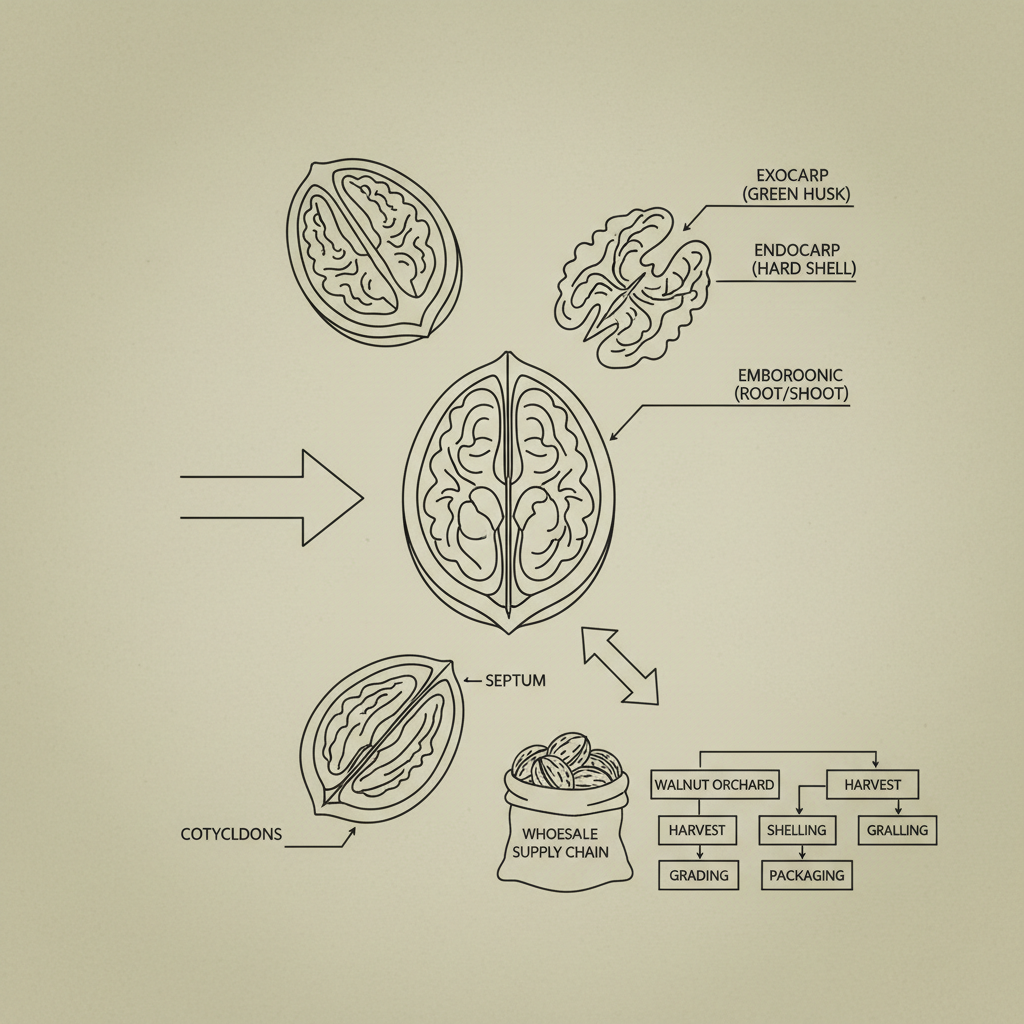
The walnut fruit stands as one of the most nutrient-dense botanical offerings in the agricultural world, serving as a cornerstone for both gourmet culinary arts and holistic health. Globally, the demand for high-quality walnuts has surged as consumers shift toward plant-based proteins and omega-3 fatty acids, making the processing of this fruit a vital industrial activity. Understanding the nuances of the walnut fruit—from its cultivation to the precision of its shelling—is essential for ensuring food security and maximizing the economic value of the harvest.
From a global trade perspective, the industry is evolving rapidly, with significant production hubs in China, the United States, and Europe striving to meet stringent ISO quality standards. The challenge lies in maintaining the structural integrity of the kernel while optimizing the removal of the hard shell, a process that requires a blend of traditional knowledge and modern mechanical engineering. As we navigate a world increasingly focused on "superfoods," the walnut fruit has emerged as a primary candidate for sustainable agricultural scaling.
Whether it is used in the form of stripped walnut kernels for industrial baking or kept as whole walnuts for premium retail, the versatility of this fruit is unmatched. By integrating advanced processing techniques, the industry can reduce waste and enhance the shelf-life of the product, ensuring that the natural antioxidants and healthy fats remain intact. This guide explores the comprehensive journey of the walnut fruit, providing insights into its industrial application and long-term commercial value.
Global Relevance of Walnut Fruit
The global market for walnut fruit has seen an unprecedented rise, driven by a worldwide shift toward health-conscious eating. According to trade data, the consumption of walnut kernels has grown significantly in Asian and European markets, where they are prized for their cardiovascular benefits and cognitive support. This surge has forced producers to rethink their supply chains, moving from artisanal harvesting to large-scale, automated industrial processing to meet the volume demands of global retailers.
Beyond mere consumption, the walnut fruit plays a critical role in rural economic development. In many regions, the cultivation of walnuts provides a stable source of income for small-scale farmers, while the processing plants create industrial jobs. The synergy between agricultural growth and mechanical processing ensures that the value chain—from the orchard to the packaged stripped walnut kernels—remains robust and sustainable in the face of fluctuating market prices.
Definition and Industrial Meaning
In simple botanical terms, the walnut fruit is a drupe, consisting of a fleshy outer husk and a hard inner shell that protects the edible kernel. However, in the context of the food processing industry, "walnut fruit" refers to the entire commodity cycle, including the raw harvested nut, the dried in-shell product, and the refined kernels. The industrial meaning extends to the grading of the fruit based on size, color, and oil content, which determines its final market placement.
Connecting this to modern humanitarian and health needs, the walnut fruit serves as a vital source of plant-based nutrition in areas where animal proteins are scarce or restricted. Its high caloric density and long shelf-life make it an ideal component for emergency food rations and long-term storage. The ability to process these nuts into stable, stripped kernels allows for easier distribution and consumption across diverse geographic zones.
Furthermore, the industrialization of the walnut fruit has led to the development of secondary markets. The shells, once considered waste, are now repurposed for industrial abrasives, biomass fuel, and organic soil conditioners. This transition from a single-product harvest to a zero-waste industrial model exemplifies the modern approach to sustainable agribusiness.
Core Components of Quality Processing
The durability of the walnut fruit during transport is a primary concern for exporters. To maintain the quality of the internal kernel, the shell must remain intact until it reaches the processing facility. Advanced drying techniques are employed to reduce moisture levels, preventing mold growth and ensuring that the fruit remains stable during long sea voyages.
Scalability in processing is achieved through the implementation of automated shelling machines. These systems are designed to handle various sizes of walnut fruit, applying precisely calibrated pressure to crack the shell without damaging the delicate kernel inside. This mechanical precision is what separates commercial-grade stripped walnut kernels from lower-quality, fragmented products.
Cost efficiency in the walnut fruit industry is driven by the optimization of the sorting process. Optical sorting technology now allows processors to remove discolored or shriveled kernels in milliseconds, ensuring that only the highest grade of fruit reaches the consumer. By reducing manual labor and increasing throughput, producers can offer competitive pricing while maintaining premium quality standards.
Practical Applications and Use Cases
The applications of walnut fruit span multiple sectors, from high-end confectionery to pharmaceutical supplements. In the food industry, stripped walnut kernels are integrated into bakery products and energy bars, providing a crunchy texture and rich flavor profile. In many European regions, whole walnuts are sold as seasonal delicacies, valued for their natural packaging and freshness.
In specialized contexts, such as nutrient-dense food kits for remote industrial zones or post-disaster relief operations, the walnut fruit is utilized for its concentrated energy. Because it provides essential fats and proteins in a small volume, it is an efficient choice for logistics-heavy environments. Additionally, walnut oil, extracted from the fruit, is increasingly used in the cosmetics industry for its skin-regenerating properties.
Processing Efficiency of Various Walnut Fruit Grades
Long-Term Value and Sustainability
The long-term value of the walnut fruit is rooted in its environmental sustainability. Walnut trees are perennial crops that contribute to carbon sequestration and soil stability, making them a preferred choice for agroforestry projects. By investing in walnut orchards, landowners create a biological asset that appreciates over time while providing a renewable source of income.
From a social perspective, the industry fosters trust and reliability through certifications like Organic and Fair Trade. When consumers know that their walnut fruit is sourced from ethical farms that prioritize soil health and fair wages, the emotional value of the product increases. This alignment of profit and purpose ensures that the industry can thrive without compromising the ecological balance of the regions where it operates.
Future Trends in Walnut Processing
The future of the walnut fruit industry is being shaped by digital transformation and automation. We are seeing the integration of AI-driven sensors that can predict the optimal harvest time by analyzing the chemical composition of the fruit in real-time. This prevents premature picking and ensures that every walnut fruit reaches its maximum nutrient density before processing.
Sustainability is also driving innovation in packaging. The industry is moving away from single-use plastics toward biodegradable films derived from the walnut fruit's own husk. This circular economy approach not only reduces the carbon footprint of the product but also appeals to the growing demographic of eco-conscious consumers who demand transparency in the packaging lifecycle.
Furthermore, the rise of "precision agriculture" allows for the targeted application of water and nutrients, reducing the waste associated with traditional farming. By utilizing drone technology to monitor orchard health, producers can ensure a consistent supply of high-quality walnut fruit, mitigating the risks posed by climate change and pest infestations.
Challenges and Expert Solutions
Despite the growth, the walnut fruit sector faces significant challenges, most notably the risk of aflatoxin contamination and pest-related losses. These issues can devastate an entire season's harvest and lead to costly shipment rejections in international markets. Experts suggest a multi-pronged approach: implementing strict moisture control during the drying phase and utilizing biological pest control methods to minimize chemical reliance.
Another limitation is the variability in shell thickness, which often leads to kernel breakage during mechanical shelling. To overcome this, the industry is shifting toward "smart shelling" systems that use acoustic sensors to determine the thickness of the walnut fruit shell before applying pressure. This adaptive technology significantly increases the percentage of whole kernels, thereby increasing the commercial value of the final product.
Finally, logistics costs remain a barrier for small-scale producers. The solution lies in the formation of cooperatives and the establishment of regional processing hubs. By aggregating the walnut fruit from multiple small farms, producers can achieve the economies of scale necessary to invest in high-end vacuum packaging and cold-chain logistics, ensuring the product reaches global markets in peak condition.
Analysis of Walnut Fruit Processing and Market Viability
|
Processing Grade
|
Shelling Efficiency
|
Market Demand
|
Price Stability
|
| Premium Whole Kernels |
High (9.2/10) |
Very High |
Stable |
| Standard Stripped Kernels |
Moderate (7.5/10) |
High |
Fluctuating |
| Industrial Walnut Pieces |
Very High (9.8/10) |
Moderate |
Consistent |
| Organic Walnut Fruit |
Moderate (6.8/10) |
Rising |
Premium |
| In-Shell Walnuts |
N/A (10/10) |
Moderate |
Seasonal |
| Walnut Fruit By-products |
High (8.5/10) |
Emerging |
Low |
FAQS
Industrial processing ensures a higher level of consistency in kernel size and purity. Automated systems use optical sorting and precision cracking to minimize the amount of shell fragments and "dust" that often contaminate manually shelled products. This leads to a cleaner, more professional product that is safer for large-scale food manufacturing and retail.
When stored in a cool, dry environment and vacuum-sealed, stripped walnut kernels can remain fresh for 6 to 12 months. However, because the walnut fruit is rich in polyunsaturated fats, it is susceptible to oxidation. For long-term storage, refrigeration or freezing is recommended to prevent rancidity and preserve the natural flavor and nutritional profile.
Yes, walnut trees are highly sustainable as they are perennial and contribute significantly to carbon sequestration. Unlike annual crops, they don't require yearly tilling, which protects the soil from erosion. When integrated into agroforestry systems, walnut fruit production supports biodiversity and provides a long-term, stable agricultural asset for the land.
Quality is primarily determined by the color, aroma, and integrity of the kernel. High-grade walnut fruit should have a light, creamy color without dark spots or shriveling. The aroma should be mild and nutty, with no hint of bitterness or chemical smells. Additionally, a low percentage of broken kernels in a sample indicates superior shelling and handling processes.
To import walnut fruit successfully, ensure the supplier adheres to ISO and HACCP standards. It is critical to request Phytosanitary Certificates and Certificates of Origin to clear customs smoothly. Utilizing moisture-controlled containers (reefers) is highly recommended for long-distance shipping to avoid mold and preserve the quality of the kernels.
Absolutely. Walnut shells are incredibly hard and durable, making them excellent for industrial applications. They are widely used as an eco-friendly abrasive for sandblasting, as a filler in composite plastics, and as a biomass fuel source. Repurposing the shell turns a waste product into a revenue stream, enhancing the overall profitability of the walnut industry.
Conclusion
The journey of the walnut fruit from a simple orchard harvest to a high-value industrial commodity is a testament to the fusion of agriculture and technology. By focusing on precision processing, sustainable cultivation, and rigorous quality control, the industry has transformed the walnut from a basic food item into a global superfood. The integration of automated shelling and AI-driven sorting not only enhances the economic return for producers but also ensures that consumers receive a product that is safe, nutritious, and consistent.
Looking ahead, the walnut fruit industry must continue to embrace green innovations and digital transparency to meet the demands of a conscious global market. By reducing waste and optimizing the supply chain, producers can ensure that the ecological and nutritional value of the walnut is preserved for generations to come. For those seeking premium quality and reliable supply in the nut industry, embracing these modern standards is the only way to maintain a competitive edge in the global marketplace. Visit our website for more insights: www.luhuawalnut.com