Understanding the fluctuations of the china walnut price is essential for international buyers, food processors, and distributors who rely on high-quality nut imports. As China continues to be a global leader in walnut production, the cost dynamics are influenced by harvest yields, regional climate variations, and the growing demand for nutrient-dense superfoods.
The market is characterized by a diverse range of varieties, from the renowned Xinjiang paper-shell walnuts to the high-yield 33 Walnut. Factors such as shell thickness, kernel recovery rates, and moisture levels directly impact the market value, making it crucial for stakeholders to distinguish between different grades when analyzing the china walnut price.
For those seeking a reliable supply chain, sourcing directly from a professional factory ensures transparency and competitive china walnut price levels while maintaining strict BRC quality system certifications.
Global Market Context of China Walnut Price
China stands as one of the world's largest walnut producers, with key growing regions in Xinjiang, Yunnan, and Hebei. The global relevance of the china walnut price stems from the scale of production and the ability of Chinese factories to implement standardized grading and sorting techniques, which ensures consistency for importers in Europe, America, and the Middle East.
The primary challenge for global buyers is navigating the price volatility caused by seasonal harvests and regional weather patterns. By integrating factory trade and professional production lines, companies like Hebei Luhua can stabilize costs and ensure a year-round inventory, mitigating the risks associated with sudden market spikes.
Defining Value in the Chinese Walnut Industry
In simple terms, the china walnut price is not a single figure but a spectrum based on the physical and nutritional characteristics of the nut. Value is determined by the "kernel recovery rate" (yield), the thickness of the shell, and the visual quality of the kernel, such as the preferred "extra light" color found in premium varieties.
This pricing structure is deeply connected to modern health trends. As consumers shift toward plant-based diets and superfoods rich in omega-3 fatty acids and antioxidants, the demand for high-yield, thin-shell varieties like the 33 Walnut has increased, driving a premium in the market for "paper-shell" options.
Furthermore, the distinction between in-shell and stripped kernels creates two different pricing tiers. In-shell walnuts are valued for their natural preservation and longer shelf life, whereas stripped kernels command a higher price due to the additional processing and labor involved in shelling and grading.
Core Factors Influencing Walnut Market Costs
One of the most critical components affecting the china walnut price is the yield percentage. For instance, Xinjiang Paper Shell 185 walnuts offer a yield of 60%-65%, which significantly increases their commercial value compared to varieties with lower recovery rates. Higher yield means less waste for the processor and more product for the consumer.
Another key factor is shell thickness and ease of opening. The "paper-shell" characteristic of the 33 Walnut allows it to be opened by hand, reducing the need for mechanical shelling and lowering the overall operational cost for snack brands, which indirectly influences the final china walnut price offered to the end consumer.
Lastly, quality certifications and processing standards play a role. A factory that has passed the provincial BRC quality system certification can command a more stable price by guaranteeing food safety and consistency. Professional production lines—including machine screening, blowing for empty shells, and manual rechecking—ensure that only compliant items are exported.
Comparative Analysis of Variety Pricing
Different walnut varieties cater to different market segments, each with a distinct pricing logic. The 33 Walnut, known as the "gold standard," balances high productivity with a premium flavor profile, making it a favorite for both wholesale and retail markets. In contrast, the Xinfeng Thin-shell variety focuses on big size and a competitive price point, appealing to bulk industrial users.
The following data illustrates the relative value ratings based on key industry parameters such as kernel yield, shell thinness, and market demand, which collectively define the current china walnut price trends.
Relative Value Rating by Walnut Variety
Global Applications and Commercial Use Cases
Chinese walnuts are versatile raw materials used across the snack, bakery, and ingredient processing sectors. In the snack industry, bulk in-shell walnuts are preferred for roasted products, where the natural shell provides an authentic consumer experience and protects the nut from oxidation during transit.
For large-scale bakery operations, the 33 Walnut is highly valued for its light color and mild taste, which ensures a consistent flavor profile in cakes and pastries. By sourcing in-shell, manufacturers can control the cracking and grading process internally, optimizing their own costs while benefiting from the stable china walnut price offered by source factories.
Long-Term Value of In-Shell Sourcing
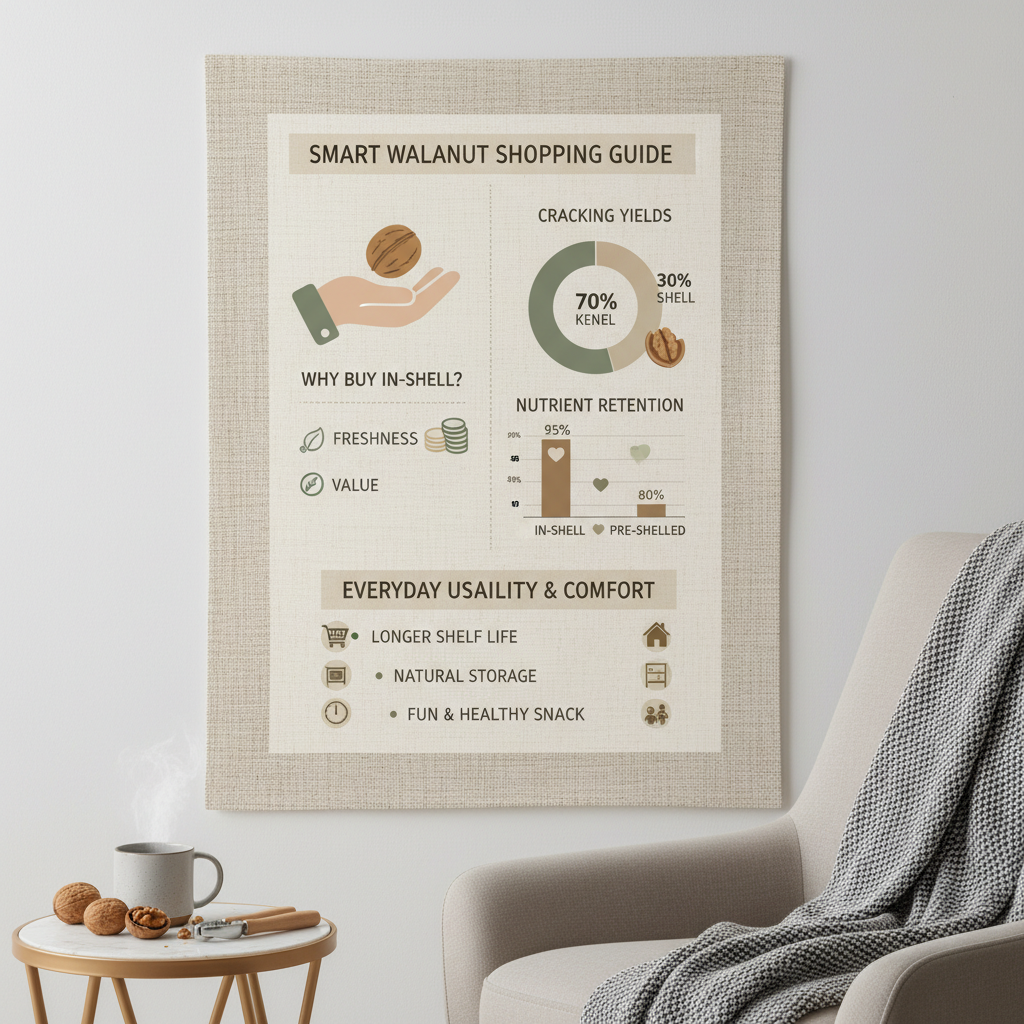
Choosing walnuts in shell over pre-shelled kernels offers significant long-term nutritional and financial value. The natural hard shell acts as a biological vault, shielding the delicate omega-3 fatty acids and polyphenols from light and air, which prevents rancidity and preserves the heart-healthy oils.
From a commercial perspective, in-shell walnuts have a much longer shelf life, which reduces waste and spoilage during long-distance shipping to regions like the Middle East or Europe. This durability allows importers to manage their inventory more effectively without worrying about the rapid degradation of nutrient density.
Moreover, the high kernel recovery rate of "paper-shell" varieties ensures that the buyer is paying for the actual nut rather than excess shell weight, maximizing the ROI and stabilizing the effective china walnut price per kilogram of edible kernel.
Future Trends and Supply Chain Innovations
The future of the industry is moving toward increased automation and digital transparency. Modern factories are implementing automatic weighing and sealing systems to reduce human error and ensure precise packaging, which helps in maintaining a consistent china walnut price through reduced operational overhead.
Sustainability is also becoming a key driver. With the development of own planting bases, factories can now ensure better traceability and implement green farming practices. This vertical integration allows for better quality control from the soil to the final shipment, reducing the impact of external market volatility.
Additionally, the rise of OEM/ODM customization allows brands to tailor packaging and labels to specific regional markets, adding value beyond the raw commodity price. This shift from selling a generic product to providing a customized solution is transforming how the china walnut price is perceived in the global B2B landscape.
Comparative Analysis of Chinese Walnut Varieties and Market Positioning
| Variety Name |
Kernel Yield (%) |
Shell Characteristic |
Market Price Tier |
| Xinjiang Paper Shell 185 |
60% - 65% |
Thinnest shell |
Premium High |
| Xin 2 Thin-shell |
52% - 55% |
Smooth white shell |
Mid-to-High |
| 33 Thin-shell |
48% - 51% |
Best looking |
Market Standard |
| Xinfeng Thin-shell |
47% - 50% |
Big size |
Competitive/Bulk |
| 33 Walnut in Shell |
51% - 53% |
Unique thin-shell |
Premium Mid |
| Standard Hebei Mix |
45% - 50% |
Variable thickness |
Economy |
FAQS
The most significant factors include the kernel yield percentage, shell thickness, and the variety of the walnut. For example, the Xinjiang Paper Shell 185, with a yield of 60-65%, generally commands a higher price than varieties with lower recovery rates. Additionally, moisture levels (ideally below 5%) and quality certifications like BRC influence the market value.
The 33 Walnut is often considered the "gold standard" because it balances high productivity, an ultra-thin shell (paper-shell), and a premium flavor profile. While other varieties might have larger sizes or slightly higher yields, the 33 Walnut's combination of ease-of-cracking and light-colored kernels makes it highly desirable for both retail and industrial use.
In-shell walnuts offer superior nutritional preservation. The shell protects the omega-3 fatty acids and antioxidants from oxidation and light exposure, preventing rancidity. For commercial buyers, in-shell walnuts also provide a longer shelf life and reduced risk of contamination during long-distance international shipping.
To ensure a fair price, work with a source factory that integrates production and trade. Check for certifications (like BRC), request free samples, and verify the kernel yield and moisture specifications. Direct sourcing removes middleman markups and provides transparency regarding the production line and grading process.
Xinjiang and Yunnan are among the top regions. Xinjiang is famous for its large, thin-shelled walnuts with high yields, while Yunnan is known for rich aromas. Northern regions like Hebei and Shanxi also provide stable supplies and professional processing capabilities to meet international export standards.
Yes, walnuts are an excellent addition to weight loss diets when eaten in moderation. They are rich in protein and fiber, which help control appetite and maintain steady blood sugar levels. The healthy unsaturated fats provide satiety, reducing the urge to snack on unhealthy, processed foods.
Conclusion
Navigating the complexities of the china walnut price requires a deep understanding of variety specifications, yield percentages, and the logistical advantages of in-shell sourcing. By prioritizing high-recovery varieties like the 33 Walnut and partnering with BRC-certified factories, buyers can ensure a balance of cost-efficiency and premium quality. The combination of natural preservation and standardized industrial processing makes Chinese walnuts a cornerstone of the global healthy-snacking market.
Looking forward, the integration of automated production and sustainable farming will further stabilize supply chains and enhance the value proposition for international distributors. We encourage global partners to seek direct factory collaborations to optimize their sourcing costs and guarantee product integrity. Visit our website for more information and customized quotes: www.luhuawalnut.com