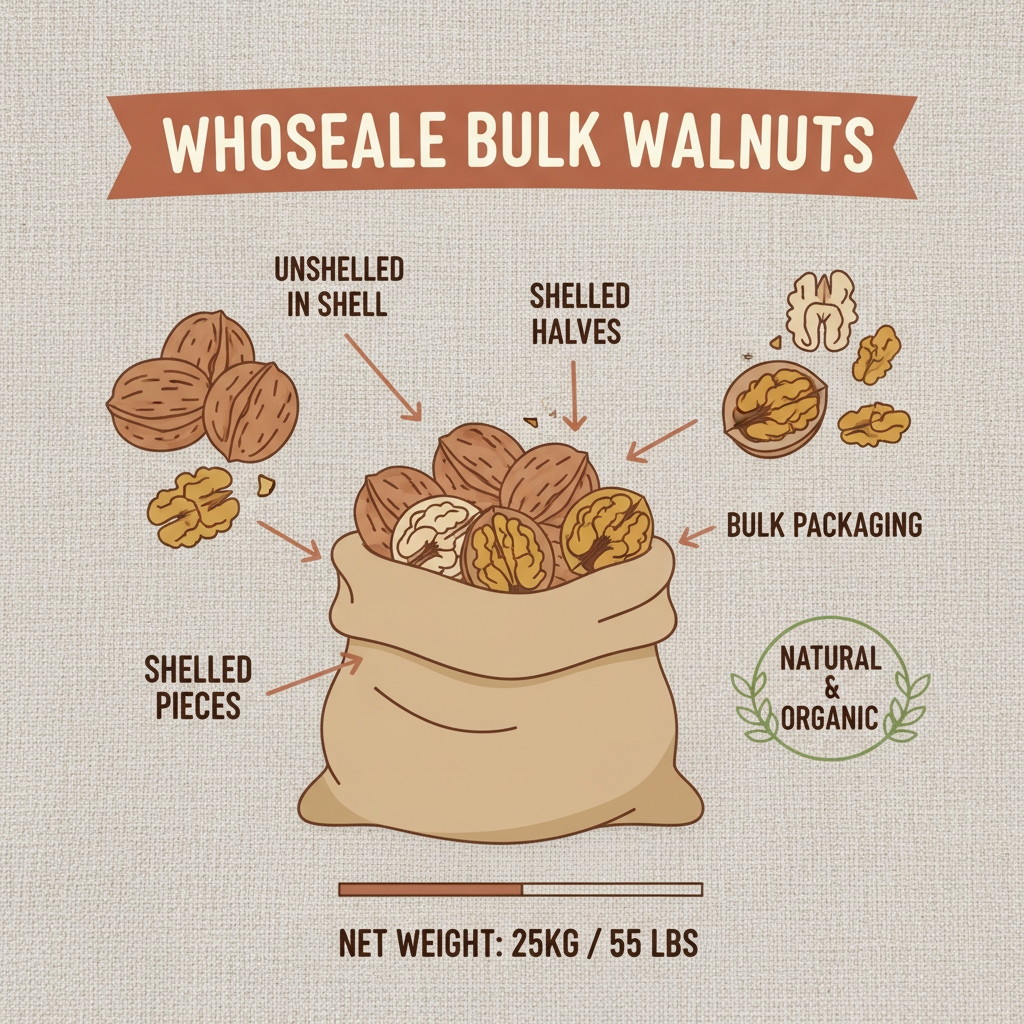
Understanding the fluctuations of the walnut price in china is essential for global importers and health-conscious consumers alike, as China remains a pivotal hub for high-quality nut production. The market is driven by a combination of agricultural yield, regional farming expertise in provinces like Xinjiang, and the growing global demand for nutrient-dense superfoods.
The dynamics of the walnut price in china are not merely about cost but reflect the quality standards, shell thickness, and kernel yield of the produce. For businesses, tracking these price trends allows for better procurement strategies and ensures that they can secure premium varieties, such as the thin-shell 185 walnuts, at competitive rates.
By analyzing the walnut price in china, buyers can differentiate between various grades of produce, ensuring they receive the best balance of size, moisture content, and taste for their specific market needs.
Global Influence of Walnut Price in China
The walnut price in china serves as a benchmark for the Asian nut market, influencing trade flows across the Middle East, Europe, and America. As China optimizes its production lines and expands its planting bases, the efficiency of the supply chain directly affects the accessibility of high-grade nuts for international distributors.
Hebei Luhua Import and Export Trade Co., Ltd, with nearly 30 years of experience, exemplifies how integrating factory trade can stabilize the walnut price in china by removing unnecessary middlemen and providing direct source factory pricing to global partners.
Determining Factors of Chinese Walnut Pricing
Several core components dictate the walnut price in china, with the most significant being the yield percentage and shell thickness. For instance, the Xinjiang Paper Shell 185 variety offers a high yield of 60%-65%, making it more valuable than varieties with thicker shells because the consumer receives more edible kernel per kilogram.
Another critical factor is the size and appearance. Walnuts with a diameter of 32mm+ and a white, smooth shell are consistently priced higher due to their aesthetic appeal and perceived quality. Moisture levels are also strictly monitored, with premium exports maintained below 5% to ensure long-term shelf stability and prevent mold.
Finally, the integration of scientific quality management systems, such as BRC certification, adds a premium to the walnut price in china. Factories that provide OEM/ODM customization and rigorous manual selection processes ensure a product that meets international safety and quality standards, justifying a higher market value.
Quality Grading and Its Impact on Value
The pricing structure is deeply tied to the specific grade of the nut. When buyers inquire about the walnut price in china, they are often looking at a spectrum that ranges from the high-yield 185 Paper Shell to the competitive Xinfeng thin-shell varieties.
Different yield percentages directly shift the walnut price in china; for example, a variety with a 60%-65% yield is naturally more expensive than one with a 47%-50% yield, as the efficiency of the product is much higher for the end-user.
Ultimately, the walnut price in china reflects the level of processing involved. The transition from raw harvest to machine screening, blowing of empty shells, and final manual re-checking creates a value-added product that is recognized and loved by consumers globally.
Market Analysis and Cost Efficiency
Achieving cost efficiency in the nut trade requires a deep understanding of how the walnut price in china varies by variety. By choosing the Xinfeng thin-shell walnut, which offers a competitive price and big size (32mm-37mm), importers can maintain healthy margins without sacrificing the visual appeal of the product.
The balance between yield and price is the key to scalability for wholesalers. While the top-tier 185 walnuts provide the best kernel quality, the diversified product range allows clients to target different consumer segments based on their budget and quality requirements.
Variety Comparison regarding Walnut Price in China
Global Applications of Chinese Walnuts
Chinese walnuts are utilized across diverse industries, from gourmet snack production to health-supplement manufacturing. Because the walnut price in china remains competitive, these nuts are widely exported to the Middle East, Europe, America, and Asia, where they are integrated into everything from traditional desserts to modern protein bars.
In professional culinary settings, the thin-shell 185 walnut is particularly valued for its ease of opening (often by one hand), making it a favorite for high-end catering and luxury gift baskets where presentation and convenience are paramount.
Long-Term Value and Nutritional Benefits
The enduring value of Chinese walnuts extends far beyond the immediate walnut price in china, rooted deeply in their status as a superfood. Rich in omega-3 fatty acids, particularly alpha-linolenic acid (ALA), these walnuts are essential for heart health, helping to lower bad cholesterol and reduce systemic inflammation.
Furthermore, they provide critical support for brain development and cognitive function. The presence of antioxidants, vitamin E, and polyphenols protects neurons from oxidative stress, which is why they are frequently recommended for children in growth phases and elderly individuals looking to prevent cognitive decline.
From a metabolic perspective, the high fiber and protein content assist in appetite control and weight management. For those managing diabetes, the regular inclusion of walnuts in a balanced diet helps maintain stable blood sugar levels and improves overall insulin sensitivity.
Future Trends in the Walnut Export Industry
The future of the walnut price in china will likely be influenced by increased automation in the processing stage. The shift toward fully automatic weighing and sealing, combined with AI-driven sorting to remove non-compliant items, will further enhance product consistency and reduce waste.
Sustainability is also becoming a key driver. With own planting bases and a commitment to scientific quality management, factories are moving toward greener cultivation practices that ensure long-term soil health and crop reliability, which will stabilize pricing in the coming decade.
Digital transformation in the supply chain, allowing for real-time inventory tracking and direct factory-to-consumer models, will make the walnut price in china more transparent and accessible for small and medium-sized enterprises worldwide.
Analysis of Chinese Walnut Varieties and Market Metrics
| Variety Name |
Yield % |
Size Range |
Market Value Score |
| Xinjiang Paper Shell 185 |
60%-65% |
30mm+/32mm+ |
10/10 |
| Thin-shell Xin 2 |
52%-55% |
30mm+/32mm+ |
8/10 |
| Thin-shell 33 |
48%-51% |
31mm+/37mm+ |
7/10 |
| Xinfeng Thin-shell |
47%-50% |
32mm-37mm |
9/10 |
| Top White 185 |
51%-53% |
30mm+/32mm+ |
9/10 |
| Standard Mixed Grade |
45%-50% |
Various |
6/10 |
FAQS
The most influential factors are the yield percentage, shell thickness, and kernel size. For example, varieties like the Xinjiang Paper Shell 185 command a higher price because of their 60%-65% yield, meaning more edible nut per shell. Additionally, moisture content (kept below 5%) and certification like BRC impact the final export value.
The 185 walnut is renowned for its uniquely thin shell, which allows it to be opened by one hand, and its high-quality white kernel. Compared to the Xinfeng variety, which is focused on big size and competitive pricing, the 185 variety emphasizes top-tier kernel quality and superior yield, making it highly popular in Middle Eastern and European markets.
Yes, absolutely. Chinese walnuts are rich in omega-3 fatty acids, specifically alpha-linolenic acid (ALA), which is essential for building brain cells and improving neuronal communication. They also contain antioxidants like vitamin E and polyphenols that protect against oxidative stress, supporting memory and learning ability in young adults.
Yes, professional factories like Hebei Luhua Import and Export Trade Co., Ltd provide comprehensive OEM/ODM services. This includes label customization, packaging design, and specific weight requirements to help international buyers align the product with their local brand identity and market standards.
Quality is ensured through a multi-step scientific process: machine screening to remove non-compliant items, machine blowing to eliminate empty shells, and a final stage of manual selection and re-checking. This rigorous system, backed by BRC certification, ensures that only full, high-quality nuts are packed and shipped.
Walnuts support cardiovascular health by lowering bad cholesterol and reducing inflammation. They also aid in metabolic health by improving insulin sensitivity for diabetics and promoting gut health through the growth of beneficial bacteria, making them a versatile superfood for overall well-being.
Conclusion
Navigating the complexities of the walnut price in china requires a balance of understanding agricultural metrics—such as yield and moisture—and recognizing the long-term nutritional value these products provide. From the high-yield Xinjiang Paper Shell to the cost-effective Xinfeng varieties, Chinese walnuts offer a scalable solution for global health and culinary needs, backed by decades of production expertise and rigorous quality control systems.
As the industry moves toward greater automation and sustainable farming, the value proposition of Chinese walnuts will only strengthen. For businesses looking to expand their global footprint with reliable, high-quality nuts, partnering with a source factory that integrates trade and production is the most effective way to ensure consistency and competitiveness. Visit our website: www.luhuawalnut.com