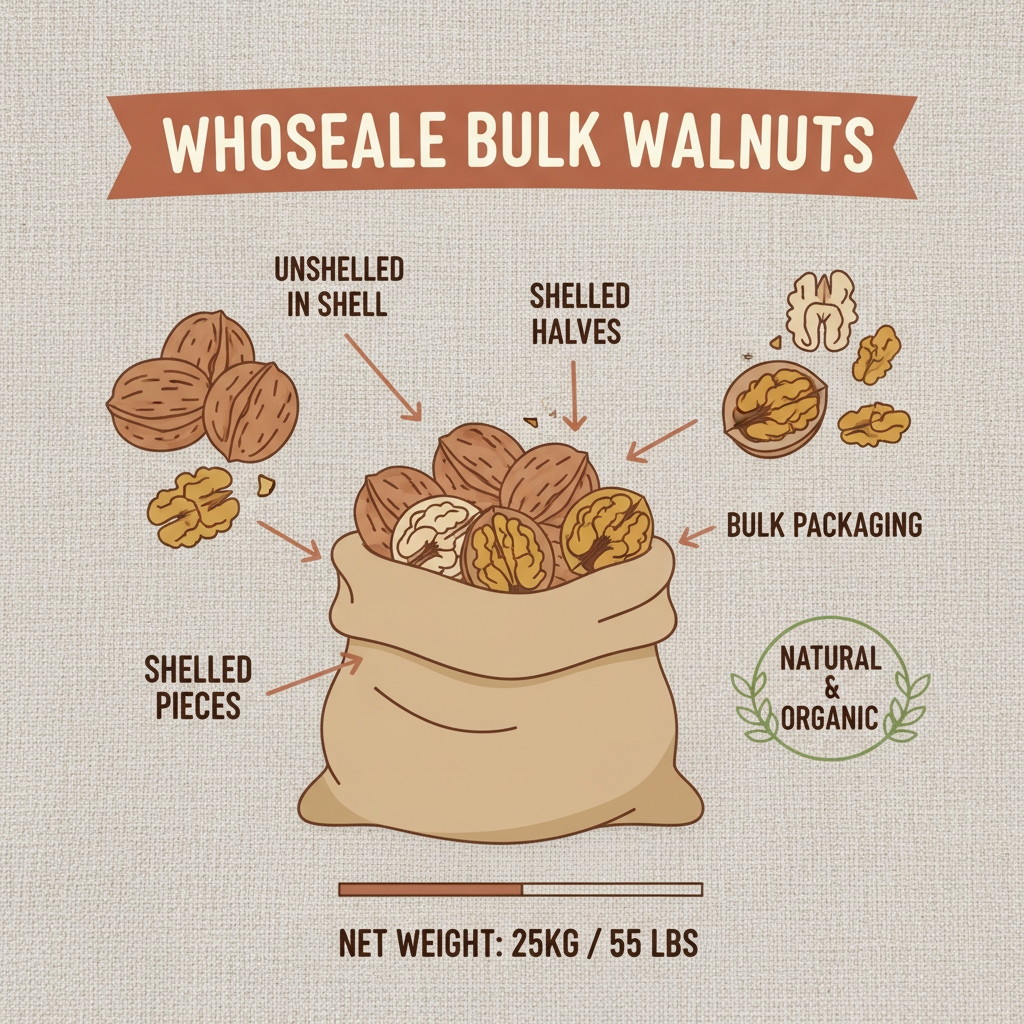
When analyzing the cost of bulk nut procurement, the 250g walnut price often serves as a critical benchmark for retail packaging and small-batch wholesale evaluation. While large industrial orders are measured in tons, this specific weight provides a snapshot of the value-to-volume ratio essential for consumer-facing products.
Pricing in the walnut sector is rarely static, fluctuating based on harvest yields, kernel grade, and the complexity of the processing method—such as the difference between raw shells and stripped kernels. For procurement managers, understanding these cost drivers is the only way to avoid overpaying during seasonal peaks.
This analysis explores the technical and market variables that influence walnut pricing, from the impact of BRC-certified processing to the logistical efficiencies of source factories.

Market Fundamentals of Nut Pricing

Walnut pricing is governed by a combination of biological yield and industrial processing efficiency. In the global market, the cost is not merely a reflection of the raw nut but incorporates the "extraction yield"—the percentage of edible kernel recovered from the shell.
Factors such as origin and harvest timing play a pivotal role. For instance, Chinese walnuts processed in specialized hubs like Hebei leverage integrated planting bases to stabilize costs, reducing the volatility typically associated with third-party sourcing.
Technical Drivers of Kernel Value
The value of a kernel is primarily determined by its physical specification. The industry categorizes kernels into Halves, Quarters, and Pieces. "Extra Light Halves" (ELH) command the highest premium due to their visual appeal and structural integrity, which are critical for high-end confectionery and bakery products.
Beyond size, the skin-removal process significantly impacts the final price. Physical stripping processes are preferred over chemical ones to ensure that the kernels retain a sweet, natural taste without the bitterness often associated with improperly processed skins.
Furthermore, the application of low-temperature roasting technology adds value by enhancing the flavor profile and extending shelf life while preserving essential omega-3 fatty acids and nutrients, making the product more attractive to health-conscious markets.
The Impact of Processing Standards
Certification is a non-negotiable factor in the international trade of nuts. When evaluating a supplier, the presence of a BRC (British Retail Consortium) quality system certification indicates that the facility adheres to global food safety and quality management standards.
The transition from a simple trading company to an integrated factory-trade model allows for tighter control over the supply chain, ensuring that certifications like BRC are maintained from the planting base to the final vacuum packaging.
This integration reduces the risk of contamination and quality drift. By utilizing advanced X-ray separation and infrared light machines, factories can remove malignant impurities that manual inspection might miss, thereby justifying a higher price point through guaranteed safety.
Evaluating Value Across Grades
To understand the pricing hierarchy, one must look at the relationship between color, size, and utility. Light-colored kernels are generally more sought after in the Western markets, where they are used as primary ingredients in salads and cakes.
The following index illustrates the relative value weight of different kernel specifications, where a higher index represents a higher market premium based on visual and structural requirements.
Figure 2. Relative Value Index by Kernel Specification
Industrial Application Scenarios
In a typical industrial bakery setting, the choice of kernel depends on the end product's texture. For instance, whole halves are utilized in premium sourdough breads to provide a visual "premium" cue to the consumer. Conversely, quarters and pieces are integrated into fillings or ground into pastes, where structural integrity is less critical than consistent taste.
Procurement teams often balance their orders by mixing grades—using a portion of Extra Light Halves for topping and Light Pieces for the interior. This strategic sourcing helps optimize the total cost of goods sold (COGS) while maintaining product quality.
Shifting Trends in Global Sourcing
The global nut market is moving toward "transparency sourcing." Buyers no longer accept generic origin labels; they require data on the planting base, the specific processing technology used, and the exact certifications of the factory.
There is also a growing demand for customized packaging. Transitioning from 10kg industrial bags to vacuum-sealed 2x5kg formats allows smaller wholesalers to maintain freshness without investing in massive cold-storage infrastructure.
As sustainability becomes a core metric, the industry is seeing a shift toward integrated supply chains. Companies that control the process from the orchard to the export document phase can offer more stable pricing and faster delivery times, typically ranging from 7 to 15 days.
Procurement Selection Framework
Selecting the right walnut supplier requires a multidimensional evaluation. Price is a factor, but the "true cost" includes the rate of damaged kernels, the accuracy of the weight, and the reliability of the delivery schedule.
A critical trade-off exists between "Light" and "Amber" kernels. While Amber kernels may be more affordable, they can affect the color consistency of baked goods, potentially requiring more artificial coloring or affecting the perceived quality of the final product.
The following framework provides a comparative look at how different walnut specifications meet specific industrial needs.
| Kernel Grade | Primary Use Case | Visual Requirement | Relative Cost |
|---|---|---|---|
| Extra Light Halves | Premium Toppings | Highest (Bright) | Premium |
| Light Halves | General Baking | High (Consistent) | Standard High |
| Light Quarters | Fillings/Granola | Moderate | Moderate |
| Light Pieces | Ground Pastes | Low | Economical |
| Amber Halves | Dark Breads/Cookies | Low (Deep Color) | Competitive |
| Mixed Crumbs | Industrial Flour Mix | None | Lowest |
Questions & Answers
The price is primarily driven by the kernel grade (e.g., Extra Light Halves vs. Amber Pieces), the processing method (stripped vs. natural skin), and the certification level of the factory. Additionally, packaging types—such as vacuum sealing versus standard bags—and the volume of the overall order significantly impact the unit cost of smaller retail-sized portions.
Generally, yes. Stripped kernels undergo an additional physical process to remove the outer skin, which eliminates bitterness and improves the visual appeal. This extra step in production, combined with the labor and equipment required for skin removal without damaging the kernel, adds a premium to the final price.
While BRC-certified products may have a slightly higher upfront cost, they reduce the "risk cost" for the buyer. Certification ensures rigorous food safety standards and quality consistency, which prevents costly product recalls, reduces the need for secondary testing, and ensures compliance with international import regulations, especially in Europe and North America.
It depends on the product. For high-end artisanal breads, Extra Light Halves are preferred for their look. For mass-market cookies or granola, Light Quarters or Pieces offer the best balance between cost and performance. The goal is to match the kernel's structural integrity to the baking process's heat and pressure requirements.
Shelled walnuts are highly susceptible to oxidation due to their high omega-3 content. To prevent rancidity and maintain nutritional value, they should be stored in airtight containers, preferably in a refrigerator or freezer. Vacuum packaging from the factory is highly recommended for bulk shipments to extend the shelf life up to 24 months.
For professional export factories with year-round inventory and established logistics channels, the typical delivery time is between 7 and 15 days. This efficiency is usually achieved through integrated trade-factory models that handle both the production and the complex export documentation in-house.
Final Thoughts
Navigating the complexities of walnut procurement requires looking beyond the immediate 250g walnut price and analyzing the underlying value drivers—grade, processing technology, and certification. By focusing on specifications like Extra Light Halves and ensuring BRC compliance, buyers can secure a product that meets both aesthetic and safety requirements.
Ultimately, the most sustainable procurement strategy relies on partnering with integrated factories that control the supply chain from the planting base to the final package, ensuring stability in both quality and pricing throughout the year.