Walnut varieties represent a fascinating and economically significant aspect of agriculture, with a history spanning millennia. From ancient trade routes to modern-day nutritional science, different walnut types have played crucial roles in diverse cultures and economies. Understanding these varieties isn’t simply about identifying trees; it’s about optimizing yields, tailoring production to specific climates, and enhancing the nutritional benefits derived from this versatile nut. The increasing global demand for walnuts, driven by health consciousness and culinary innovation, makes the study of walnut varieties increasingly relevant.
Globally, walnut production is concentrated in regions with temperate climates, including the United States, China, Turkey, Iran, and Mexico. According to the Food and Agriculture Organization of the United Nations (FAO), world walnut production has steadily increased in recent decades, driven by expanding orchards and improved farming techniques. However, climate change, disease pressures, and the need for sustainable agricultural practices present ongoing challenges. Identifying and cultivating walnut varieties resilient to these factors is paramount for ensuring a consistent and reliable global supply.
The escalating demand for walnuts highlights the critical need to explore and understand the differences between walnut varieties. These differences impact everything from kernel size and oil content to shell thickness and disease resistance. Ultimately, a comprehensive grasp of these factors contributes to greater efficiency, sustainability, and profitability within the walnut industry, satisfying the demands of a growing worldwide market.
The Significance of Walnut Varieties
The sheer diversity of walnut varieties is a testament to centuries of natural selection and human cultivation. Different varieties exhibit unique traits that influence their suitability for specific purposes. For example, some walnuts are prized for their large kernel size, making them ideal for snacking, while others possess superior oil content, making them valuable for culinary applications or industrial uses. Understanding these nuances is crucial for optimizing walnut production and maximizing economic returns.
Furthermore, the exploration of walnut varieties is directly linked to the ongoing pursuit of sustainability in agriculture. By identifying varieties resistant to common pests and diseases, or those that thrive in challenging climatic conditions, we can reduce our reliance on chemical interventions and promote environmentally responsible farming practices. This approach is essential for ensuring the long-term viability of the walnut industry.
Defining Walnut Varieties
Walnut varieties, in the simplest terms, are distinct types of walnut trees that possess unique genetic characteristics, leading to variations in nut size, shape, shell thickness, kernel quality, and growth habits. These differences arise through natural mutations, cross-pollination, and selective breeding over generations. The term ‘variety’ is often used interchangeably with ‘cultivar’ in horticultural contexts. Essentially, a cultivar is a plant variety that has been specifically cultivated and maintained by humans.
Understanding these nuances is vital in the context of modern agriculture, where maximizing yield, improving nutritional value, and ensuring disease resistance are key objectives. The ability to differentiate between varieties allows growers to select trees best suited to their specific environment and market demands, contributing to a more efficient and profitable operation.
These differences aren’t just cosmetic. They translate directly into impacts on the nutritional composition of the walnuts themselves, influencing factors like omega-3 fatty acid content, protein levels, and antioxidant capacity. The classification of walnut varieties allows for targeted breeding programs designed to enhance these desirable traits.
Key Characteristics of Walnut Varieties
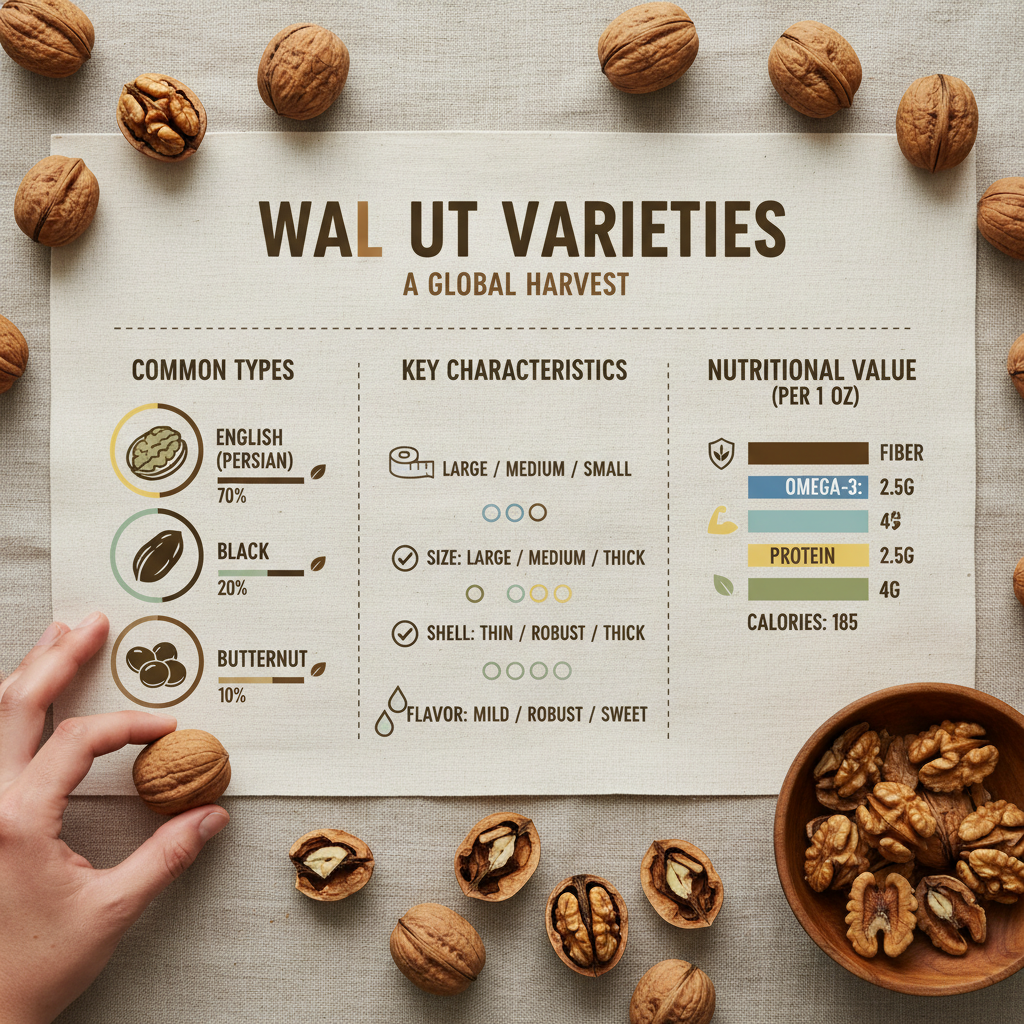
Several key characteristics differentiate walnut varieties. Kernel size is often a primary consideration, as larger kernels are typically more desirable for consumer markets. Oil content is another critical factor, influencing the flavor and texture of the walnuts, as well as their suitability for oil extraction. Shell thickness plays a role in processing efficiency, while disease resistance directly impacts yield and reduces the need for chemical interventions.
Adaptability to specific climates is also a defining trait. Some varieties thrive in warm, dry conditions, while others are better suited to cooler, wetter environments. Similarly, certain varieties exhibit greater tolerance to specific soil types or salinity levels. This inherent variability makes selecting the right walnut variety for a given location crucial for successful cultivation.
Finally, the pollination requirements of different walnut varieties are significant. Walnuts are typically wind-pollinated, but many varieties require cross-pollination with another compatible variety to achieve optimal fruit set. Understanding these compatibility relationships is essential for orchard planning and ensuring consistent yields.
Global Distribution and Adaptation
The geographical distribution of walnut varieties is closely tied to climate and soil conditions. The United States, particularly California, dominates global walnut production, with varieties like ‘Chandler,’ ‘Howard,’ and ‘Serr’ being widely cultivated. These varieties are well-adapted to the mild, Mediterranean climate of the Central Valley.
In Europe, Turkey and Italy are major walnut-producing countries, showcasing varieties adapted to slightly different conditions. In regions like the Balkans and parts of Eastern Europe, locally adapted varieties have been cultivated for centuries, often exhibiting unique characteristics suited to specific microclimates.
China is emerging as a significant player in the global walnut market, with increasing cultivation of both traditional and modern varieties. The diversity of climate zones within China allows for the cultivation of a wide range of walnut types. Developing and utilizing varieties specifically adapted to local conditions is critical for maximizing production efficiency and sustainability.
Walnut Variety Yield Potential (lbs/acre)
Applications in Food and Industry
Walnut varieties find extensive application in the food industry. Kernel quality, size, and flavor profiles determine their suitability for direct consumption as snacks, ingredients in baked goods, salads, and confectionery. Certain varieties, like ‘Hartley,’ are prized for their distinctive flavor and are often used in gourmet food products.
Beyond direct consumption, walnuts and their byproducts are used in various industrial applications. Walnut shell meal is utilized as an abrasive in cleaning compounds and polishing agents. Walnut oil, extracted from the kernels, finds use in cosmetics, paints, and varnishes. Research is also exploring the potential of walnut biomass for biofuel production, contributing to a more sustainable energy future.
Benefits and Sustainability of Diverse Varieties
Cultivating a diversity of walnut varieties offers numerous benefits. Genetic diversity enhances resilience to pests, diseases, and climate change, reducing the risk of widespread crop failure. Different varieties mature at different times, extending the harvest season and providing a more consistent supply of walnuts.
Moreover, a focus on sustainable practices within walnut variety selection is crucial. Choosing varieties that require less water, fertilizer, or pesticides reduces environmental impact. Promoting locally adapted varieties minimizes the need for long-distance transportation, lowering carbon emissions and supporting local economies.
The long-term value lies in preserving this genetic heritage and continuously improving walnut varieties through responsible breeding programs. This ensures a future where walnuts remain a nutritious, sustainable, and economically viable crop.
Future Trends in Walnut Variety Development
Future trends in walnut variety development are heavily influenced by climate change, technological advancements, and consumer demand. Research is focused on developing varieties with increased drought tolerance, heat resistance, and improved disease resistance. Genetic engineering and marker-assisted selection are being employed to accelerate the breeding process.
Precision agriculture, utilizing technologies like drones and sensors, will play an increasingly important role in monitoring orchard health and optimizing irrigation and fertilization strategies for different walnut varieties. The use of data analytics will help growers make informed decisions about variety selection and management practices.
Consumer preferences for specific walnut characteristics, such as shellability, kernel color, and flavor, will also drive future breeding efforts. The development of novel walnut products, like functional foods enriched with specific nutrients, will further stimulate demand for specialized walnut varieties.
Overview of Walnut Variety Characteristics and Suitability
| Variety Name |
Kernel Size (grams) |
Disease Resistance (1-10) |
Climate Suitability |
| Chandler |
12-14 |
6 |
Mild Mediterranean |
| Howard |
10-12 |
7 |
Cool Mediterranean |
| Serr |
13-15 |
5 |
Warm Mediterranean |
| Franquette |
8-10 |
8 |
Temperate Continental |
| Hartley |
9-11 |
6 |
Mild Mediterranean |
| Vina |
11-13 |
7 |
Warm Mediterranean |
FAQS
Chandler walnuts typically exhibit larger kernel sizes and a lighter kernel color compared to Howard walnuts. Howard varieties are known for their excellent shellability and stronger disease resistance, while Chandlers often require more careful management to prevent disease issues. The optimal choice depends on specific growing conditions and market demands.
Determining the best walnut variety for your climate requires careful consideration of factors like winter chill hours, summer temperatures, and rainfall patterns. Consulting with local agricultural extension agents or experienced walnut growers in your region is highly recommended. They can provide insights into varieties that have proven successful in similar conditions.
Walnuts are typically wind-pollinated, but most varieties are not self-pollinating and require cross-pollination with a compatible variety to achieve optimal fruit set. This means planting at least two different walnut varieties that bloom simultaneously to ensure successful pollination. Understanding pollination compatibility is crucial for maximizing yields.
Disease resistance varies significantly among walnut varieties. Some varieties, like Howard, exhibit relatively strong resistance to common diseases like walnut blight. Others, like Chandler, are more susceptible and require more intensive management to prevent disease outbreaks. Selecting disease-resistant varieties can reduce the need for chemical treatments.
Yes, ongoing research is focused on developing new walnut varieties with improved characteristics such as enhanced drought tolerance, increased disease resistance, and superior kernel quality. Breeders are utilizing both traditional breeding techniques and advanced technologies like genetic engineering to accelerate the development of these new varieties.
A well-cared-for walnut tree can live for over 100 years, with some reaching 200 years or more. However, the variety can influence lifespan. Some varieties, particularly those with weaker disease resistance, may have a shorter productive lifespan. Proper pruning, irrigation, and pest management are crucial for maximizing the longevity of walnut trees, regardless of the variety.
Conclusion
In conclusion, understanding the nuances of walnut varieties is paramount for maximizing production efficiency, sustainability, and profitability within the global walnut industry. From the key characteristics defining each type to their adaptation to diverse climates and applications in food and industry, the study of walnut varieties reveals a complex and fascinating landscape. The careful selection and cultivation of appropriate varieties are essential for meeting the growing demand for this nutritious and versatile nut.
Looking ahead, continued investment in research and development, alongside the adoption of sustainable agricultural practices, will be crucial for unlocking the full potential of walnut varieties. By embracing innovation and prioritizing long-term environmental stewardship, we can ensure that walnuts remain a valuable and sustainable resource for generations to come. Visit our website to learn more about our diverse selection of walnut varieties: www.luhuawalnut.com