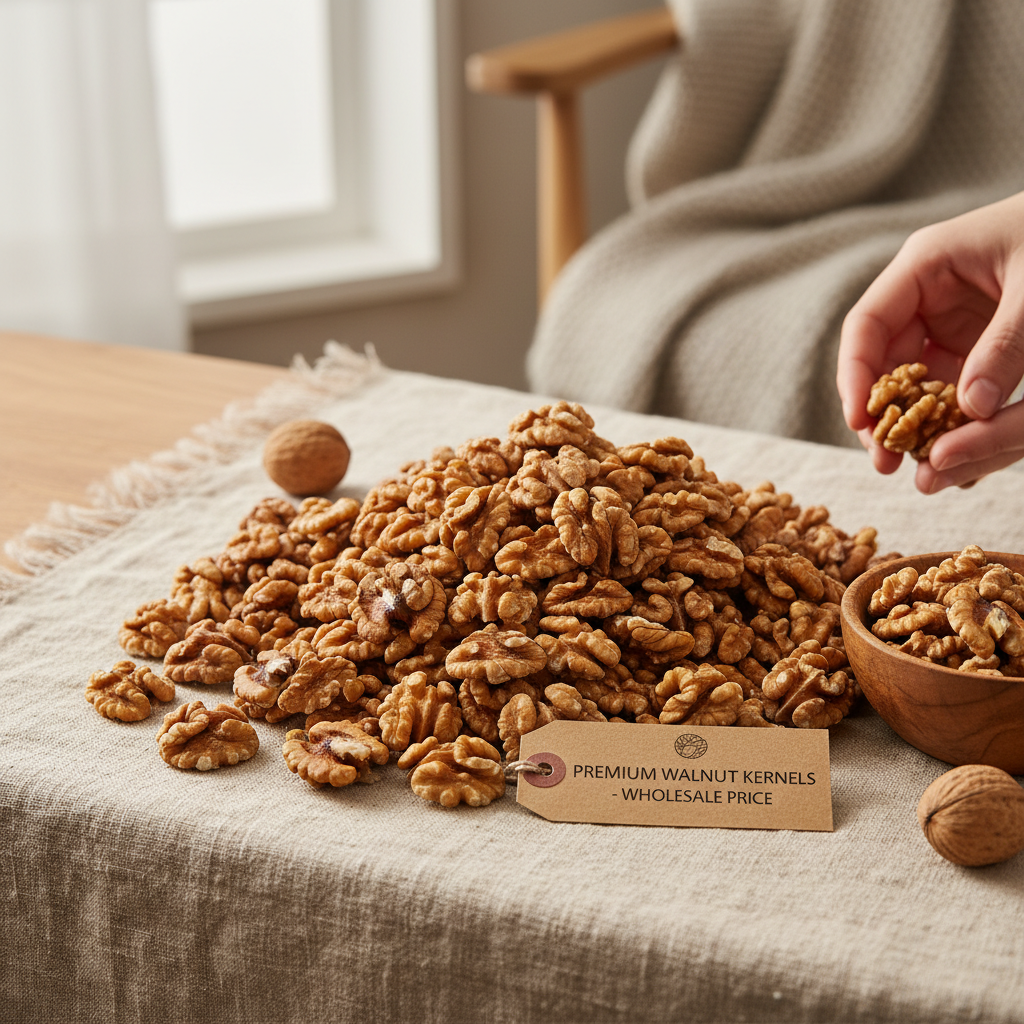
Understanding walnut kernels wholesale price is crucial in today’s global food market. The demand for high-quality walnuts is consistently rising, driven by increasing health consciousness and their versatility in culinary applications. Efficiently sourcing these kernels at wholesale prices directly impacts profitability for businesses ranging from food manufacturers to retailers and distributors. Fluctuations in the global walnut crop, geopolitical factors, and transportation costs all contribute to the dynamic nature of walnut kernels wholesale price, making informed decision-making essential.
The walnut industry is a significant contributor to agricultural economies worldwide, particularly in regions like California, Turkey, and China. Tracking wholesale price trends allows businesses to anticipate market changes, optimize inventory management, and negotiate favorable terms with suppliers. Beyond commercial considerations, understanding these prices also helps in assessing food security and affordability for consumers. Effective price forecasting is therefore vital for sustainable growth and stability within the industry.
Analyzing the intricacies of walnut kernels wholesale price provides valuable insights for a broad spectrum of stakeholders. From farmers seeking fair returns to consumers seeking affordable nutrition, a comprehensive understanding of price dynamics benefits all involved. This knowledge empowers informed decision-making, fosters transparency within the supply chain, and ultimately contributes to a more resilient and equitable walnut market.
The Significance of Walnut Kernels Wholesale Price
The wholesale price of walnut kernels is a critical benchmark for the entire industry. It dictates the profitability for processors, impacts retail pricing, and influences consumer access to this nutritious food source. Understanding the drivers behind these prices—from harvest yields and global demand to processing costs and transportation expenses—is vital for effective business planning. walnut kernels wholesale price fluctuations can significantly affect supply chain dynamics.
Furthermore, a stable and predictable wholesale price environment promotes investment and growth within the walnut industry. It encourages farmers to maintain and improve their orchards, motivates processors to adopt efficient technologies, and allows retailers to offer competitive pricing. A transparent wholesale market fosters trust among all stakeholders, leading to a more sustainable and equitable system.
Defining Walnut Kernels Wholesale Price
Walnut kernels wholesale price refers to the cost at which large quantities of shelled walnuts are sold from processors or distributors to businesses—such as food manufacturers, retailers, or other wholesalers—rather than directly to individual consumers. This price is typically expressed per pound or per kilogram and varies based on several factors, including kernel size, quality (color, absence of defects), and origin. It differs significantly from retail pricing, which includes markups for packaging, branding, and distribution.
The wholesale market operates on volume discounts, meaning the per-unit price decreases as the quantity purchased increases. This makes it economically advantageous for businesses with substantial demands. Wholesale prices are often negotiated based on long-term contracts or spot market transactions, reflecting current supply and demand conditions. Accurate price tracking is essential for businesses involved in importing, exporting, or processing walnuts.
Understanding the various grades and classifications of walnut kernels is also key to interpreting wholesale price. Different grades (e.g., Jumbo, Large, Medium) command different prices due to variations in size and aesthetic appeal. The definition of ‘wholesale’ itself can vary, so clear communication and standardized contract terms are vital to avoid misunderstandings and ensure fair transactions.
Key Factors Influencing Wholesale Price
Several key factors significantly influence walnut kernels wholesale price. Crop yield is arguably the most important; a large harvest generally leads to lower prices, while a poor harvest results in price increases. Weather conditions during the growing season—such as frost, drought, or excessive rainfall—can significantly impact yields. Global demand, particularly from emerging markets like China and India, plays a crucial role in driving price levels.
Supply chain disruptions, including transportation bottlenecks and geopolitical instability, can also contribute to price volatility. Processing costs—including shelling, sorting, and quality control—add to the overall expense. Furthermore, currency exchange rates impact the price for international buyers and sellers. Labor costs, particularly in harvesting and processing regions, are also a significant component. walnut kernels wholesale price depends on these combined elements.
Quality specifications—such as kernel size, color, and moisture content—directly affect price. Premium quality kernels typically command higher prices. Finally, storage and handling costs, as well as insurance, add to the overall price. Accurately assessing these factors is essential for forecasting and negotiating favorable wholesale terms.
Global Applications and Market Dynamics
Walnut kernels have a diverse range of applications, driving global demand and shaping wholesale price trends. They are widely used in the food industry as ingredients in baked goods, confectionery, snacks, and ice cream. Increasingly, walnuts are incorporated into plant-based meat and dairy alternatives, further expanding their market reach. Beyond food, walnut shell flour is used as an abrasive in polishing compounds, and walnut oil finds applications in cosmetics and pharmaceuticals.
Major importing regions include the European Union, China, India, and the United States. China is the largest consumer of walnuts globally, with demand consistently increasing. Turkey, California, and Chile are leading exporters, with California consistently dominating the market share. Regional market dynamics, such as local preferences and import regulations, influence wholesale pricing in specific locations.
The growth of e-commerce and online wholesale platforms is also impacting market dynamics, providing greater transparency and access to suppliers for businesses worldwide. This increased connectivity allows for more efficient price discovery and streamlines the supply chain.
Walnut Kernels Wholesale Price Comparison (per kg)
Advantages of Strategic Wholesale Sourcing
Strategic wholesale sourcing of walnut kernels offers numerous advantages for businesses. Securing competitive pricing is the most obvious benefit, enabling improved profit margins and the ability to offer attractive pricing to customers. Establishing long-term relationships with reliable suppliers ensures consistent quality and supply, minimizing disruptions to production.
Bulk purchasing reduces transaction costs and administrative overhead. Access to a wider range of kernel grades and sizes allows businesses to tailor their sourcing to specific product requirements. Negotiating favorable payment terms and delivery schedules further optimizes cash flow and inventory management.
Future Trends in Walnut Pricing
Several trends are expected to shape the future of walnut kernels wholesale price. Climate change poses a significant threat to walnut production, with increasing frequency of extreme weather events potentially impacting yields. The adoption of precision agriculture techniques—such as optimized irrigation and fertilization—may help mitigate these risks. walnut kernels wholesale price will also be impacted.
Growing demand from health-conscious consumers and the increasing popularity of plant-based diets will likely drive up prices. Technological advancements in sorting and grading technologies are expected to improve quality control and reduce waste. The development of new walnut varieties with improved yields and disease resistance could also impact market dynamics.
Challenges and Mitigation Strategies
Despite the opportunities, challenges exist in navigating the walnut kernels wholesale price landscape. Price volatility due to unpredictable weather patterns and geopolitical factors can create uncertainty. Maintaining consistent quality control throughout the supply chain is crucial but can be difficult. Competition from new entrants and emerging markets adds complexity.
Mitigation strategies include diversifying sourcing options, hedging against price fluctuations through futures contracts, and implementing robust quality control protocols. Building strong relationships with suppliers and investing in market intelligence are essential. Utilizing data analytics to forecast demand and optimize inventory levels can also help minimize risks.
Transparency within the supply chain—from orchard to consumer—is paramount. Traceability technologies can help ensure product authenticity and build consumer trust. Collaboration among industry stakeholders is key to addressing common challenges and fostering a sustainable walnut market.
Analysis of Factors Influencing Walnut Kernel Wholesale Price
| Factor Category |
Impact on Wholesale Price |
Mitigation Strategies |
Risk Level (1-10) |
| Weather Conditions |
Significant – Drought, frost, and excessive rain reduce yields, increasing prices. |
Diversified sourcing, crop insurance, investment in drought-resistant varieties. |
9 |
| Global Demand |
Strong Correlation – Increased demand from China and India drives prices upward. |
Market research, demand forecasting, strategic partnerships. |
7 |
| Transportation Costs |
Moderate – Fuel prices and shipping logistics influence overall costs. |
Optimized logistics, long-term shipping contracts, near-sourcing options. |
6 |
| Currency Exchange Rates |
Variable – Fluctuations in exchange rates affect import/export costs. |
Currency hedging, local currency invoicing, diversified markets. |
5 |
| Political Stability |
High Impact – Political unrest in producing regions disrupts supply. |
Geographic diversification, risk assessment, political risk insurance. |
8 |
| Processing Capacity |
Moderate - Limited processing capacity can create bottlenecks and increase prices. |
Invest in processing infrastructure, build relationships with multiple processors. |
4 |
FAQS
Several factors contribute to price fluctuations, including crop yields (influenced by weather conditions), global demand (especially from China and India), transportation costs, currency exchange rates, and political stability in key producing regions. Understanding these elements is crucial for forecasting and managing risk.
Businesses can mitigate risk through diversified sourcing, hedging with futures contracts, building strong relationships with suppliers, implementing robust quality control, and utilizing data analytics for demand forecasting. Strategic partnerships and long-term contracts can also help stabilize pricing.
Wholesale pricing refers to the cost at which large quantities of kernels are sold to businesses, while retail pricing is what consumers pay in stores. Retail prices include markups for packaging, branding, distribution, and profit margins. Wholesale prices are typically lower per unit due to volume discounts.
California is the dominant producer and exporter of walnuts globally, significantly influencing wholesale prices. Its harvest yields and production practices heavily impact market supply. Changes in California’s agricultural policies and environmental conditions can therefore have worldwide consequences.
Currency exchange rates influence the cost of importing and exporting walnuts. A stronger US dollar, for example, can make US walnuts more expensive for international buyers, potentially reducing demand and impacting prices. Conversely, a weaker dollar can make US walnuts more competitive.
Several sources provide information on walnut prices, including agricultural market reports from the USDA, industry associations, commodity trading platforms, and wholesale suppliers like Luhua Walnut. Staying informed through multiple sources is recommended.
Conclusion
In conclusion, navigating the world of walnut kernels wholesale price requires a comprehensive understanding of various interconnected factors. From weather patterns and global demand to logistical challenges and currency fluctuations, proactive monitoring and strategic sourcing are vital for success. Successfully managing these elements allows businesses to secure competitive pricing, ensure consistent quality, and build a resilient supply chain.
Looking ahead, embracing innovation—such as precision agriculture and advanced data analytics—will be crucial for mitigating risks and capitalizing on emerging opportunities. Collaboration among industry stakeholders and a commitment to transparency are essential for fostering a sustainable and equitable walnut market. For reliable sourcing and competitive walnut kernels wholesale price, visit our website today!