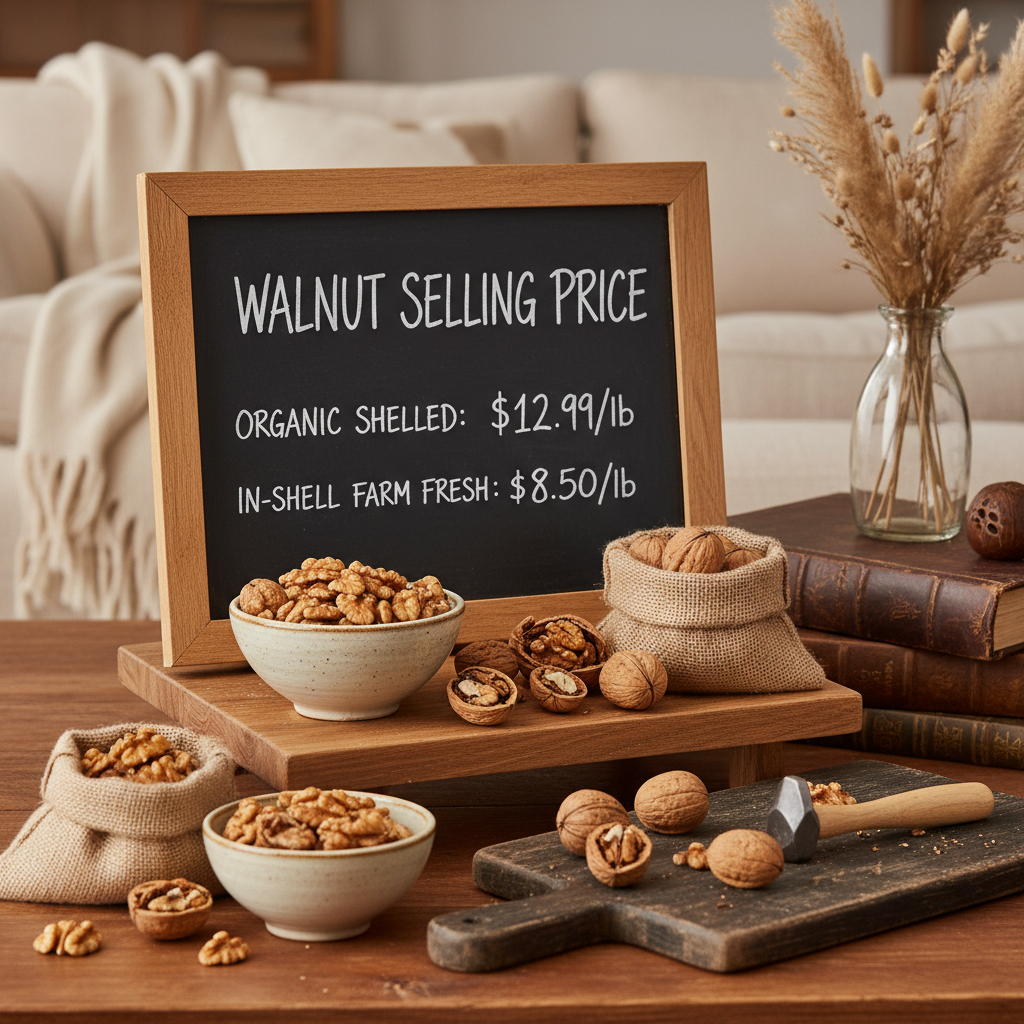
Understanding the dynamics of the nut market often begins with analyzing specific retail increments, where the 250 gm walnut price serves as a critical benchmark for both consumers and wholesalers. In the global food processing industry, this specific weight represents a common consumer packaging size, making it an ideal metric for tracking price volatility, quality shifts, and market demand across different regions.
From a commercial perspective, the valuation of such a quantity is influenced by several factors, including the grade of the kernel—whether it is an Extra Light Half or an Amber Piece—and the processing method used. For industrial buyers, monitoring these price points helps in calculating the cost-efficiency of raw materials for bakery products and healthy snacks, ensuring that the final product remains competitive.
Whether you are a wholesaler looking for bulk supply or a retailer analyzing the 250 gm walnut price, it is essential to consider the origin and certification of the product. High-quality stripped walnut kernels from BRC-certified factories ensure that the price paid reflects actual nutritional value and food safety standards.
Market Drivers of 250 gm Walnut Price
The market price for a 250 gm portion of walnuts is primarily driven by the availability of raw crops and the efficiency of the stripping process. Since walnut kernels are the edible meat removed from the hard shell, the labor and technology involved in "stripping" significantly impact the final cost. Factors such as harvest yields in China and the demand for healthy fats globally create a fluctuating price ceiling.
Furthermore, seasonal demand—particularly during holiday baking seasons—often causes a spike in the 250 gm walnut price. When demand for high-quality halves and quarters increases for premium confectionery, the limited supply of "Extra Light" grades pushes the retail price upward, forcing wholesalers to optimize their inventory management to maintain stable pricing for their clients.
Grading Systems and Their Impact on Value
In the professional walnut industry, not all kernels are created equal. The value is strictly categorized by color and size, ranging from Extra Light Halves (ELH) to Amber Pieces (AP). Lighter kernels are generally more prized in the international market, as they are perceived as fresher and more aesthetically pleasing for retail packaging.
The distinction between halves, quarters, and pieces also plays a role in pricing. Whole halves are the most expensive because they require more careful mechanical stripping to avoid breakage. Conversely, pieces and crumbs are more affordable and are typically sold to industrial bakeries that prioritize taste over visual presentation.
Consequently, when a buyer asks for the 250 gm walnut price, the answer depends entirely on the specification. An ELH grade will command a premium, while an Amber Mixed Crumbs grade will be significantly cheaper, reflecting the different utility and market demand for these specific cuts.
Processing Techniques for Premium Kernels
The quality of stripped walnut kernels is heavily dependent on the processing method. To prevent the bitter taste often associated with the outer skin, professional factories use a physical process to remove skins without damaging the nut. This meticulous approach ensures that the 250 gm walnut price reflects a product of superior purity and taste.
Additionally, the use of low-temperature roasting technology is a game-changer for nutritional retention. By avoiding high-heat scorching, the kernels retain their natural sweetness and essential omega-3 fatty acids. This added value is a key reason why premium brands can justify a higher 250 gm walnut price compared to raw, unroasted alternatives.
For those in the baking industry, the consistency of the kernel is paramount. Whether it is for a luxury cake or a healthy granola bar, the ability to source kernels that are uniform in color and size helps in maintaining product quality, making the investment in high-grade kernels a strategic business decision.
Cost Efficiency in Bulk vs Retail Packaging
There is a significant variance between procurement costs for bulk quantities, such as 10kg or 12.5kg vacuum packs, and the cost of small retail units. Bulk purchasing allows factories to reduce the per-unit cost of packaging and labor, which eventually trickles down to a more competitive 250 gm walnut price for the end consumer.
Customization also impacts the cost structure. OEM and ODM services, including label and packaging customization, add a layer of value but also increase the initial overhead. However, for brands building loyalty, the ability to offer professional, branded 250 gm packs is essential for market penetration and perceived value.
Comparison of Value Factors for 250 gm Walnut Price
Global Logistics and Supply Chain Influence
The delivery time and logistics channels play a silent but powerful role in determining the 250 gm walnut price in international markets. With typical delivery windows of 7-15 days for export, the speed of transport and the efficiency of customs documentation can either minimize or inflate the final landed cost.
Moreover, the use of vacuum packaging for bulk shipments (such as 2x5kg units) is critical for maintaining shelf life, which can extend up to 24 months. By reducing spoilage and oxidation during transit, suppliers can maintain a stable 250 gm walnut price without having to account for high wastage rates.
Certification Standards for Export Quality
In the food processing industry, certifications like BRC are not just badges of honor but economic drivers. A BRC-certified factory ensures that the production line meets global safety standards, which allows the product to enter strict markets like Europe and North America. This certification often justifies a slightly higher 250 gm walnut price because it guarantees a lower risk of contamination.
The integration of a complete quality management system and owning a planting base further stabilizes the supply chain. When a company controls the process from the tree to the vacuum pack, it can mitigate the volatility of raw material costs, ensuring a more predictable 250 gm walnut price for long-term contract partners.
For the end buyer, these certifications provide peace of mind. Knowing that the walnut kernels have undergone scientific quality control means that the nutritional profile—including the protein and healthy fats—is preserved, maximizing the value of every gram purchased.
Long-term Value Analysis of Walnut Kernels
Analyzing the long-term value of walnut kernels requires looking beyond the immediate 250 gm walnut price and considering the health benefits and industrial versatility. As consumers shift toward plant-based proteins and heart-healthy diets, the demand for high-quality stripped kernels is expected to grow, potentially increasing the baseline price.
From an industrial standpoint, the versatility of kernels—ranging from halves for decoration to pieces for filling—allows manufacturers to optimize their costs. By blending different grades, a bakery can maintain a high-quality taste while managing the overall raw material expense effectively.
Ultimately, the sustainability of the supply chain and the adoption of green processing technologies will be the next frontier. As automation increases in the stripping process, we may see a stabilization in the 250 gm walnut price, making these nutritional powerhouses more accessible to a global audience.
Comprehensive Analysis of Walnut Kernel Value Metrics
| Kernel Grade |
Market Demand |
Price Index (1-10) |
Primary Use Case |
| Extra Light Halves |
Very High |
10 |
Premium Retail / Gifting |
| Light Halves |
High |
8 |
High-end Bakery |
| Light Quarters |
Medium |
7 |
Snack Mixes |
| Light Pieces |
Medium |
6 |
Cake Fillings |
| Amber Halves |
Medium |
6 |
General Consumption |
| Amber Pieces |
Low |
5 |
Industrial Processing |
FAQS
The price is primarily influenced by the kernel grade (color and size), the processing method (such as low-temperature roasting), the certification of the factory (e.g., BRC), and the current market demand for stripped walnut kernels. Higher grades like Extra Light Halves will always command a higher price than Amber Pieces.
Yes. Walnut kernels are the ready-to-eat meat, meaning the cost of shelling and stripping is already included in the price. While whole walnuts are cheaper per pound because the shell remains, the convenience and processing of kernels increase the per-gram cost, affecting the 250 gm walnut price.
BRC certification ensures that the factory follows strict global food safety and quality management standards. While this may lead to a slight premium in the 250 gm walnut price, it significantly reduces the risk for importers and guarantees a consistent, safe product for the end consumer.
Absolutely. Purchasing in bulk (e.g., 10kg or 12.5kg vacuum packs) reduces the cost of individual packaging and handling. Wholesalers can then divide these bulk quantities into smaller retail units, allowing them to offer a more competitive 250 gm walnut price to their customers.
When properly stored in airtight containers or vacuum packaging, stripped walnut kernels can have a shelf life of up to 24 months. Maintaining this freshness is key to preserving the value and ensuring that the 250 gm walnut price reflects a high-quality, non-rancid product.
Color is a primary indicator of grade in the walnut industry. Extra Light kernels are more rare and are visually preferred for premium retail and baking, which increases their market demand and consequently the 250 gm walnut price compared to the darker Amber grades.
Conclusion
In summary, the 250 gm walnut price is more than just a retail number; it is a reflection of the entire supply chain, from the planting base and BRC-certified processing to the precision of low-temperature roasting and vacuum packaging. By understanding the relationship between kernel grades—such as the premium Extra Light Halves versus the utility-driven Amber Pieces—buyers can make informed decisions that balance cost-efficiency with nutritional quality.
As the global demand for healthy, plant-based ingredients continues to rise, the importance of sourcing from professional export factories becomes paramount. We recommend that wholesalers and retailers focus on long-term partnerships with suppliers who offer OEM/ODM customization and guaranteed quality standards. To explore our premium walnut kernels and get the most competitive pricing, visit our website: www.luhuawalnut.com