The global demand for premium nuts has seen a significant shift toward convenience and quality, making the thin shell walnut a preferred choice for consumers and wholesalers alike. By reducing the effort required for cracking while maintaining a high kernel yield, these walnuts bridge the gap between raw agricultural products and ready-to-eat snacks, driving growth in the health-food sector worldwide.
From a commercial perspective, the value of a thin shell walnut lies in its efficiency; a thinner shell means less waste and a higher percentage of edible kernel per unit of weight. This economic advantage is coupled with the intrinsic nutritional profile of walnuts, which are celebrated for their omega-3 fatty acids and antioxidants, making them a cornerstone of cardiovascular and cognitive health diets.
Understanding the nuances of walnut varieties—such as the distinction between Xinjiang Paper Shell and other thin-shell types—allows importers and distributors to optimize their supply chains. By focusing on parameters like moisture levels, size, and shell thickness, the industry ensures that the final consumer receives a product that is not only easy to open but also rich in taste and nutritional integrity.
Global Market Relevance of Thin Shell Walnut
The thin shell walnut has become a global commodity of significant interest, particularly in markets across the Middle East, Europe, America, and Asia. As consumers move toward "clean label" and natural superfoods, the demand for walnuts that offer easy access to the kernel without sacrificing flavor has skyrocketed. This trend is supported by the rising global awareness of plant-based proteins and healthy fats.
For exporters and factories like Hebei Luhua Import and Export Trade Co., Ltd, the challenge lies in balancing the "thinness" of the shell with the protection of the kernel. A shell that is too thin may risk damage during long-distance transit, while one that is too thick reduces the yield percentage. Mastering this balance is what defines a premium product in the competitive international nut trade.
Defining the Thin Shell Walnut Standard
In professional agricultural terms, a thin shell walnut is defined by its high kernel yield and the ease with which the shell can be breached. For instance, the Xinjiang Paper Shell variety is renowned for being "openable by one hand," which significantly enhances the user experience. This characteristic is not merely a convenience but a technical specification that increases the market value of the fruit.
Beyond the physical shell, the standard includes the visual quality of the kernel—often described as "top white kernel"—and the overall size of the nut. Sizes ranging from 30mm+ to 37mm+ are typically sought after in the premium segment, as they indicate healthy growth and provide a more substantial portion of edible nut meat per shell.
The integration of factory trade and professional production lines ensures that these standards are met consistently. By utilizing machine screening to remove non-compliant items and machine blowing to eliminate empty shells, producers can guarantee that every shipment of thin-shell walnuts meets the strict expectations of global BRC quality system certifications.
Core Technical Components of Quality Walnuts
The first core component of a high-quality thin shell walnut is the Yield Percentage. In the industry, yield determines the economic viability; for example, Xinjiang Paper Shells can achieve a yield of 60%-65%, which is significantly higher than standard varieties, ensuring that the buyer gets more nut and less waste.
Moisture control is the second critical factor. To maintain shelf stability and prevent mold or rancidity, the moisture content of a thin shell walnut must be kept below 5%. This technical threshold is essential for long-term storage and ensures that the kernel retains its crisp texture and fresh taste during international shipping.
Finally, the physical appearance—including shell smoothness and kernel color—plays a vital role. A "white and smooth shell" is often an indicator of careful harvesting and processing. When combined with precise sizing (such as the 32mm-37mm range seen in Xinfeng varieties), these components create a product that is visually appealing and commercially competitive.
Practical Applications and Commercial Value
The commercial application of the thin shell walnut extends from direct retail snacking to industrial food processing. In the confectionery and bakery industries, these walnuts are prized for their ability to be processed quickly. The ease of shelling reduces labor costs for food manufacturers who require high volumes of kernels for cakes, salads, and energy bars.
Furthermore, the variety of thin-shell options allows businesses to target different market segments. While the "unique and thin-shell" 185 walnuts target the luxury gift market due to their top-white kernels, the Xinfeng variety provides a "competitive price" point for mass-market distribution, ensuring that high-quality nutrition is accessible across various socio-economic levels.
Commercial Performance Analysis of Thin Shell Walnut Varieties
Long-Term Health Benefits and Nutritional Value
The consumption of thin shell walnut provides profound advantages for cardiovascular health. Rich in omega-3 fatty acids, specifically alpha-linolenic acid (ALA), these nuts help lower bad cholesterol and reduce systemic inflammation. Regular inclusion in a balanced diet can significantly decrease the risk of heart disease and enhance overall cardiovascular efficiency.
Beyond the heart, these walnuts are critical for brain development and cognitive longevity. The combination of polyphenols, vitamin E, and healthy fats protects brain cells from oxidative stress, improving memory and focus. This makes them an ideal snack for children in their developmental stages and older adults seeking to maintain mental acuity and prevent age-related cognitive decline.
Future Trends in Nut Processing and Sustainability
The future of the thin shell walnut industry is moving toward full automation and precision agriculture. By integrating AI-driven sorting and automatic weighing and sealing systems, factories can minimize human error and maximize throughput. This digital transformation ensures that only the highest-grade nuts reach the global market, maintaining a consistent quality profile.
Sustainability is also taking center stage. With a focus on owning planting bases, producers are implementing more eco-friendly farming practices to ensure the long-term viability of walnut groves. This vertical integration—from the soil to the final package—reduces the carbon footprint associated with multi-stage sourcing and ensures a traceable, ethical supply chain.
Moreover, the trend toward customized packaging and OEM/ODM services allows brands to tailor their offerings to specific regional health trends. Whether it is organic labeling or specialized nutrient-dense packaging, the ability to adapt the product to the consumer's lifestyle is driving the next wave of growth in the nut industry.
Strategic Sourcing and Quality Management
Strategic sourcing for a thin shell walnut requires a partnership with a factory that integrates both production and trade. A professional export factory, such as Hebei Luhua, provides a critical advantage by controlling the quality management system from the start. With nearly 30 years of experience, the maturity of logistics channels ensures that the product arrives fresh, regardless of the destination.
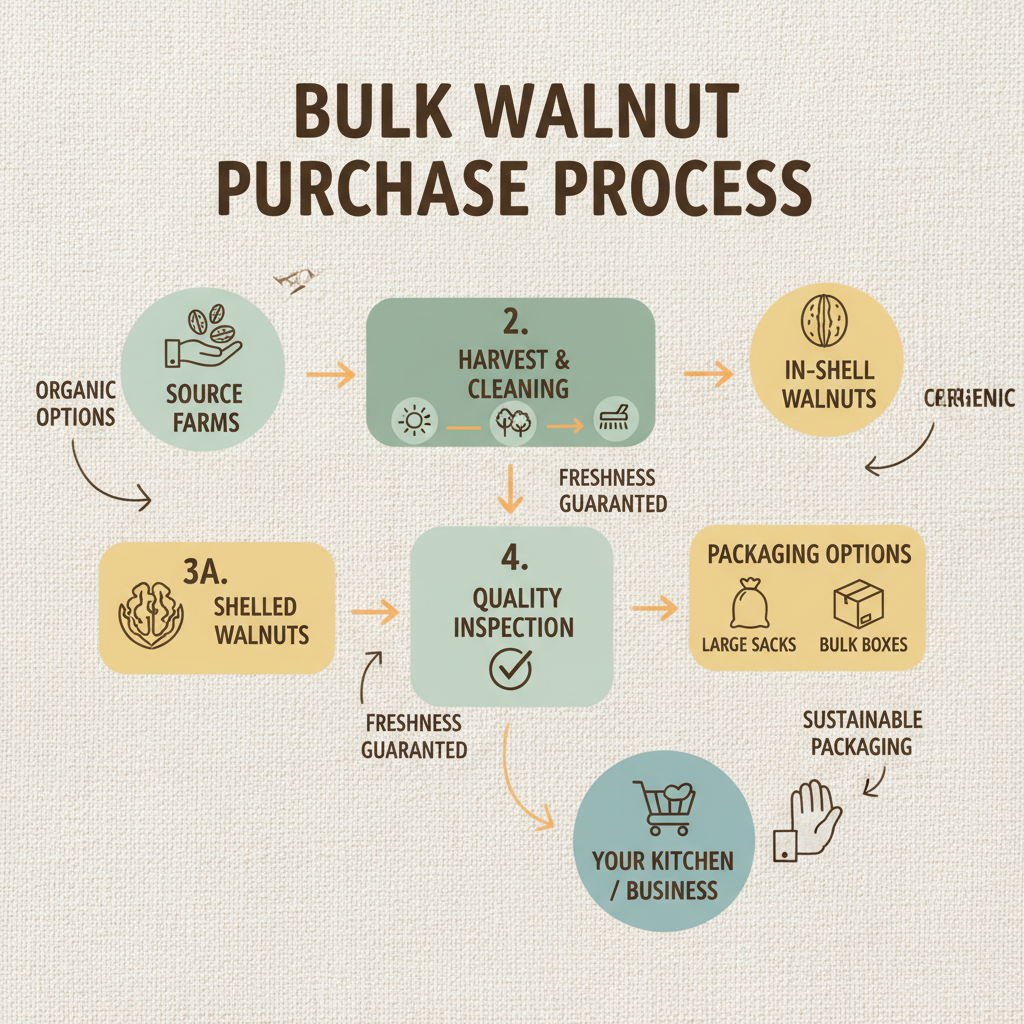
Quality management is executed through a rigorous multi-step process: careful selection, machine screening to remove non-compliant items, and machine blowing to filter out empty shells. The final layer of security is manual re-checking, ensuring that the "top white kernel" standard is met for every batch. This scientific approach is why these products are trusted in over 100 countries.
Ultimately, the reliability of the supply chain is anchored in the ability to maintain year-round inventory. By mitigating the seasonal nature of walnut harvests through professional storage, exporters can guarantee on-time delivery and stable pricing, providing a secure foundation for global business expansion.
Technical Comparison of Thin Shell Walnut Varieties
| Variety Name |
Kernel Yield % |
Size Range |
Key Advantage |
| Xinjiang Paper Shell |
60%-65% |
30mm+/32mm+ |
One-hand openable |
| Xin 2 Thin-shell |
52%-55% |
30mm+/32mm+ |
Best taste/White shell |
| 33 Thin-shell |
48%-51% |
31mm+/37mm+ |
Best appearance |
| Xinfeng Thin-shell |
47%-50% |
32mm-37mm |
Competitive Price |
| 185 Thin-shell |
51%-53% |
30mm+/32mm+ |
Top white kernel |
| Premium Mix |
50%-60% |
Various |
Balanced Versatility |
FAQS
A thin shell walnut is superior primarily due to its higher kernel yield, meaning you get more edible nut per unit of weight. Additionally, they are significantly easier to crack—some varieties can even be opened by hand—making them far more convenient for consumers and reducing labor costs for industrial processors who need the kernels for food production.
Quality is ensured through a scientific management system that includes machine screening to remove non-compliant items, machine blowing to eliminate empty shells, and a final manual inspection. We also adhere to BRC quality system certifications and maintain moisture levels below 5% to prevent spoilage during long-distance transit.
Yes, walnuts are highly beneficial for brain function. They are rich in alpha-linolenic acid (ALA), an omega-3 fatty acid essential for building brain cells and improving communication between neurons. Their antioxidants, like vitamin E, also protect the brain from oxidative stress, supporting learning and memory.
Absolutely. We provide comprehensive OEM and ODM customization services. This includes label customization, packaging design, and customized weight requirements. As a source factory, we can handle everything from mass production to the final branded packaging to help you expand your global business.
When stored in a cool, dry place with moisture levels kept below 5%, our walnuts maintain their freshness and nutritional value for an extended period. Professional vacuum sealing and appropriate packaging further extend the shelf life, ensuring they remain crisp and delicious upon arrival.
It depends on your target customer. If you are targeting the luxury or gift market, the 185 variety with its "top white kernel" is ideal. For mass-market retail where price sensitivity is higher, the Xinfeng variety offers a big size and a more competitive price point while still maintaining the thin-shell advantage.
Conclusion
The thin shell walnut represents the perfect intersection of agricultural quality and consumer convenience. By optimizing yield percentages, controlling moisture levels, and implementing rigorous quality screening, it is possible to provide a product that supports heart and brain health while remaining commercially viable for global trade. From the heart of China's walnut groves to over 100 countries, these nuts continue to set the standard for nutritional excellence.
As the industry evolves, the integration of sustainable farming and automated processing will further enhance the value of these superfoods. Whether you are a distributor looking for a reliable source factory or a consumer seeking the best nutritional support for your family, choosing a certified, high-yield thin-shell variety is the most strategic choice. To explore our professional walnut and walnut kernel export services, visit our website: www.luhuawalnut.com