Inside the Supply Chain: Peeled Walnut Kernels From Hebei
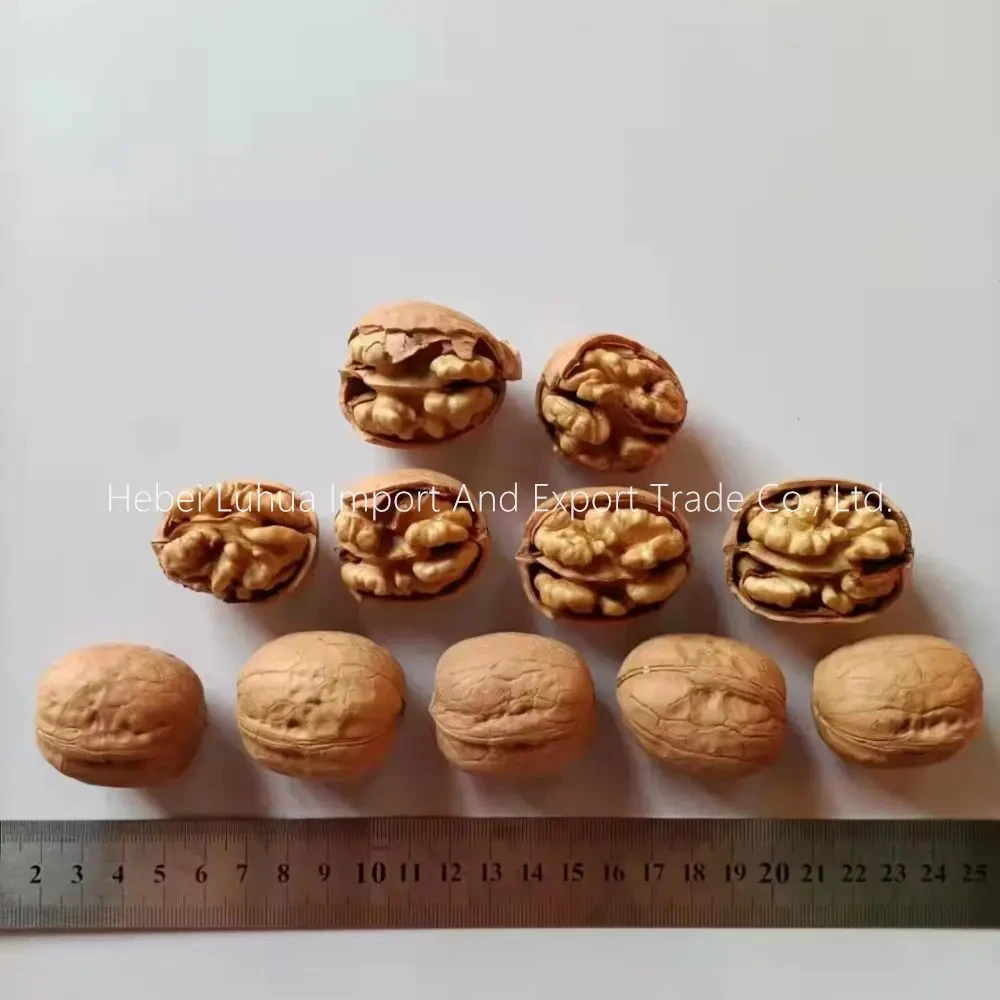
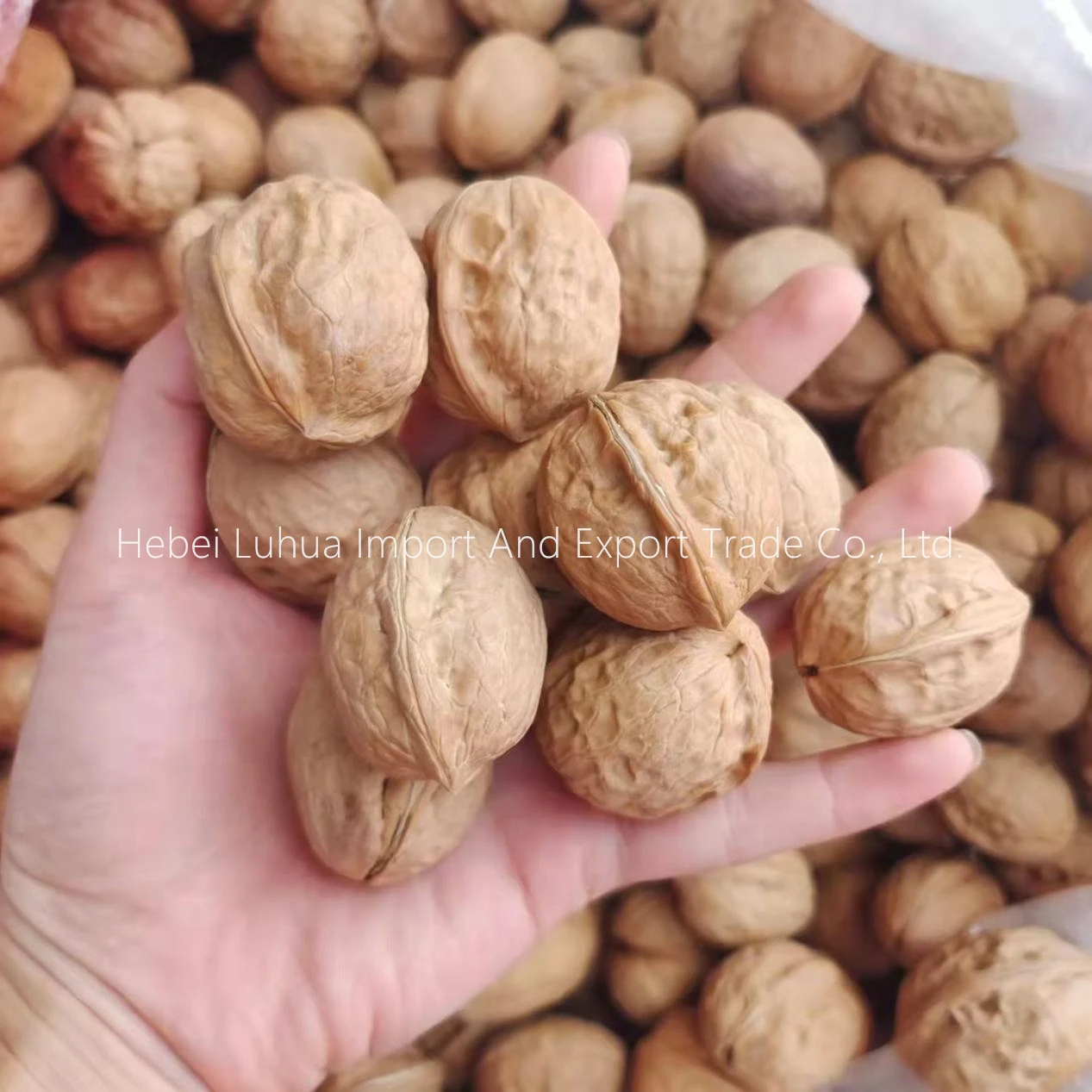
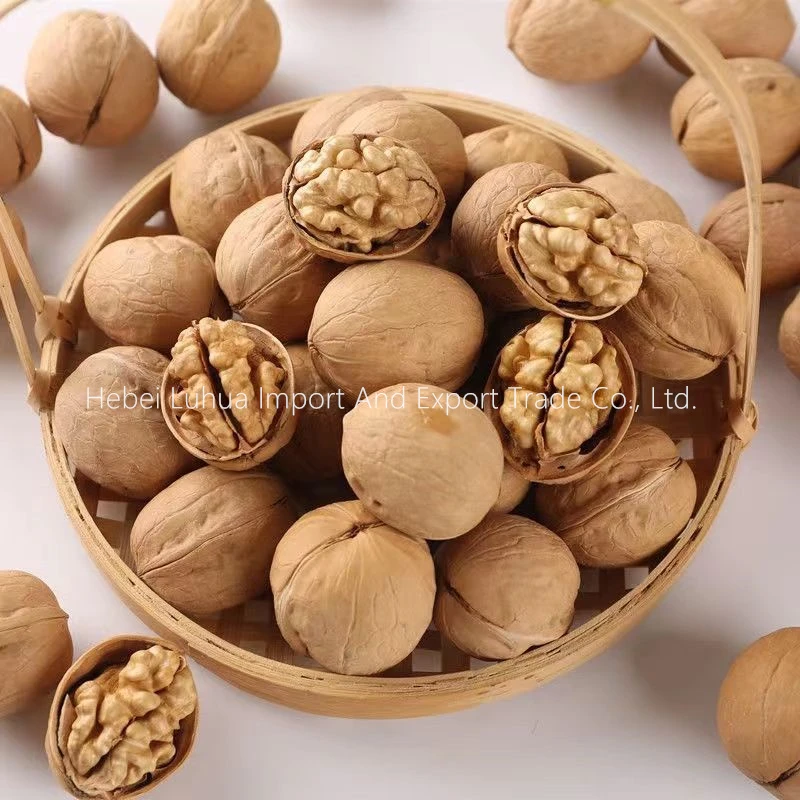
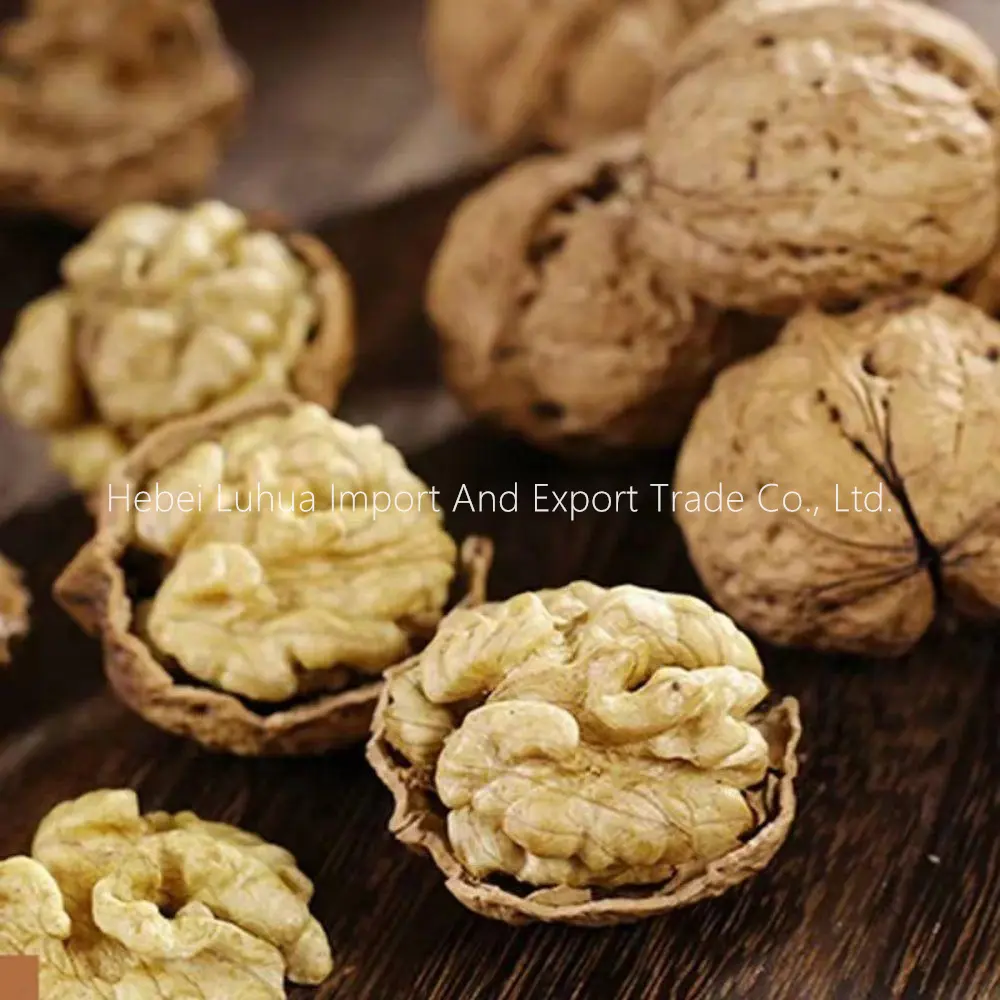
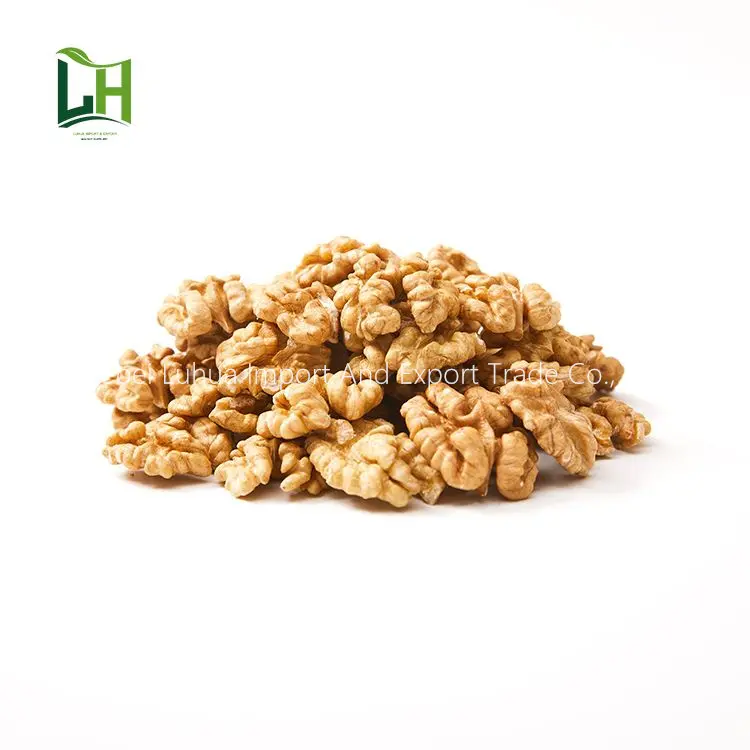
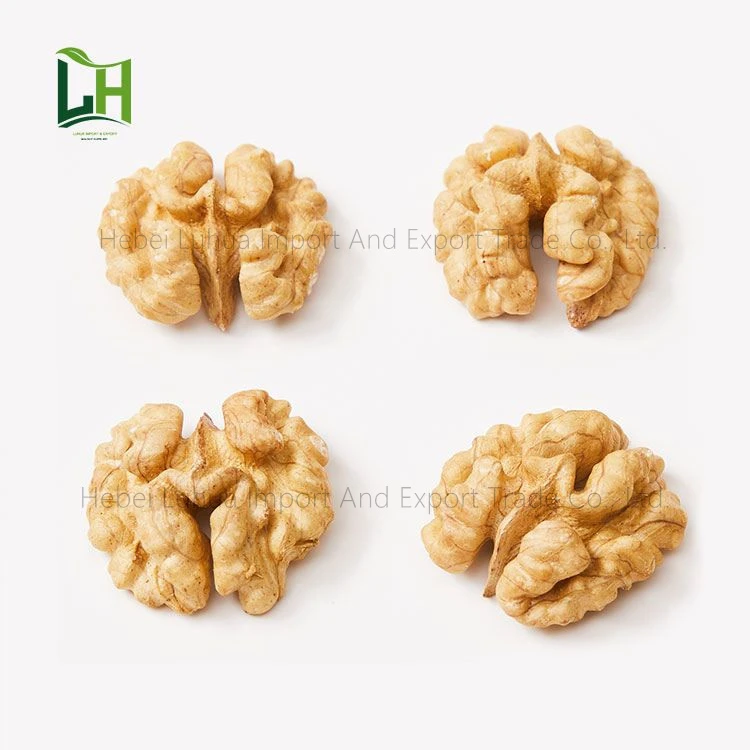
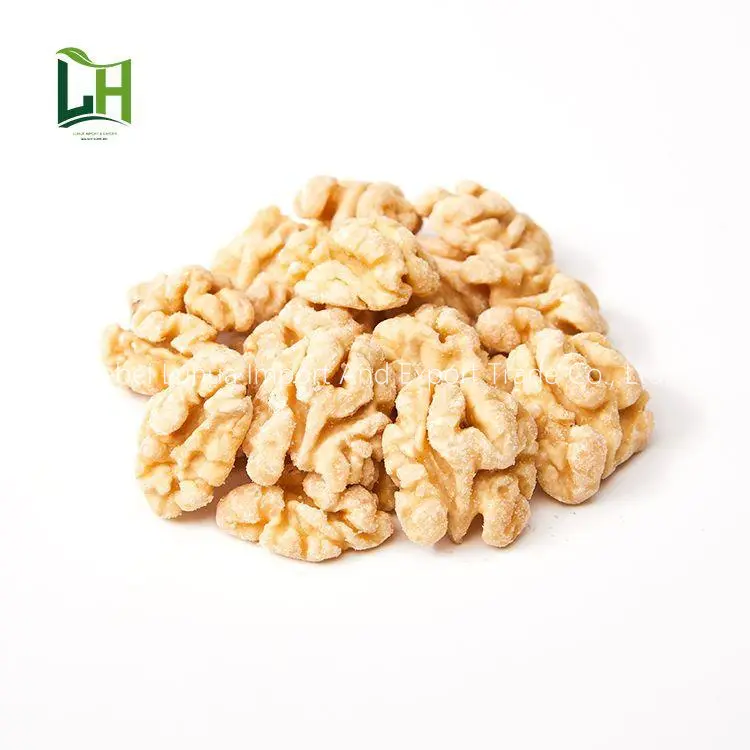
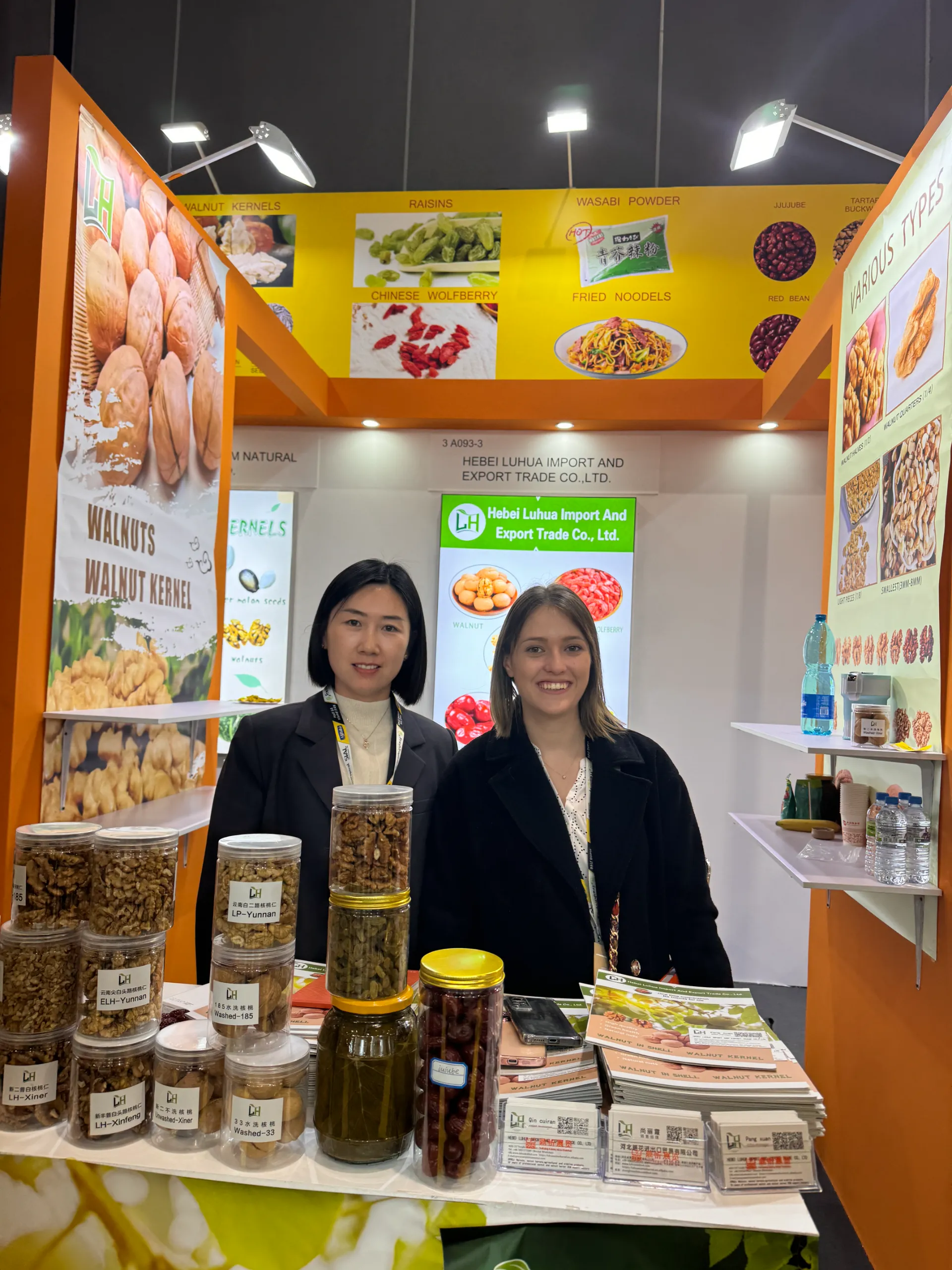
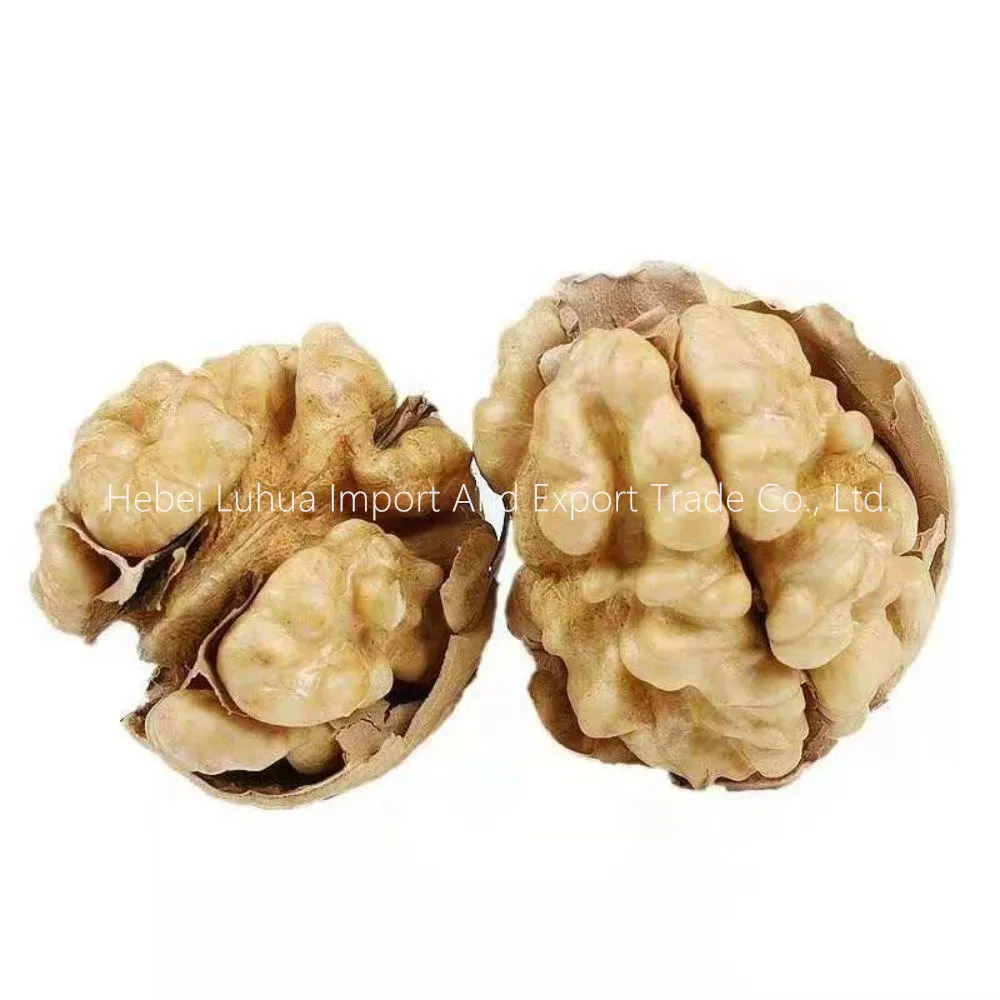
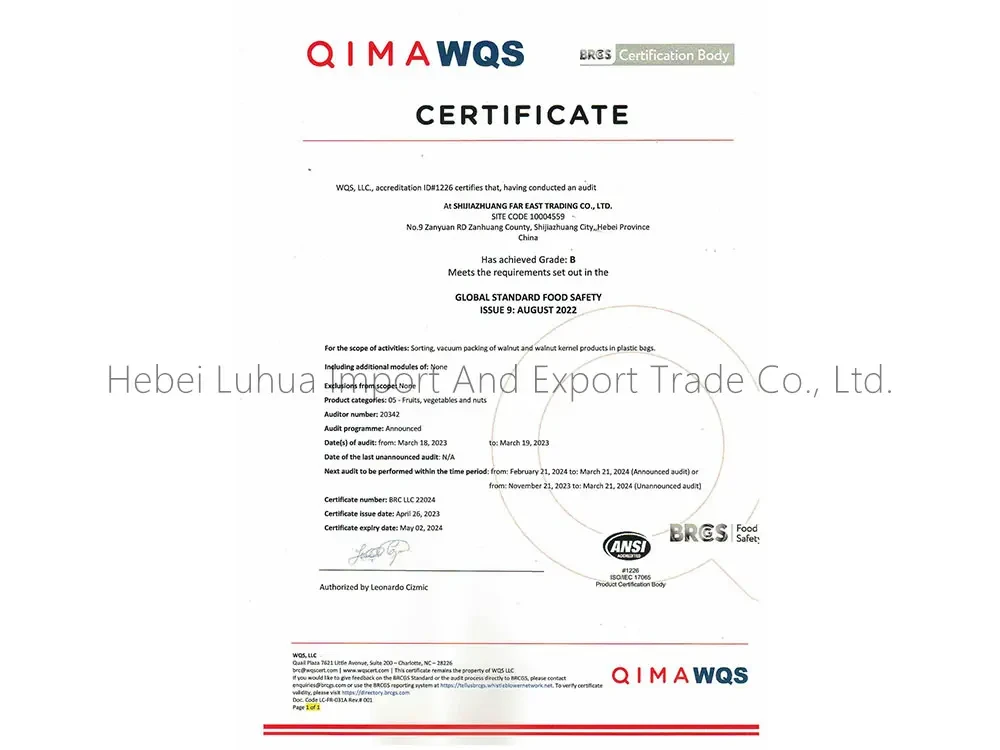
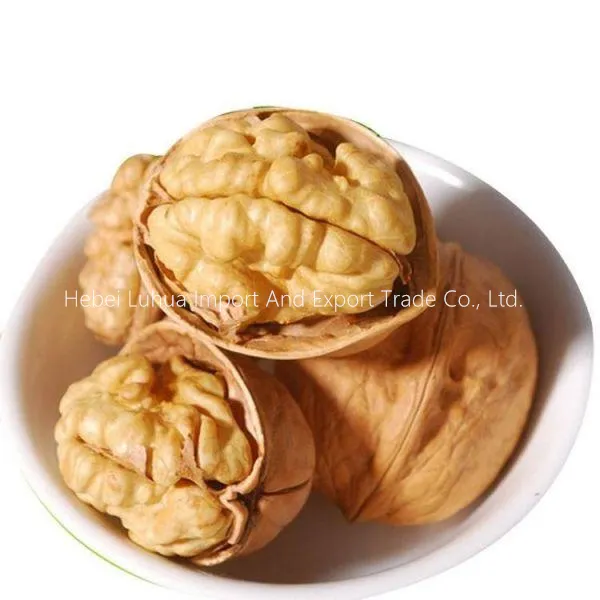
If you’ve ever wondered where premium Peeled Walnuts really come from, I spent time digging into a factory in Zanhuang County, Shijiazhuang City, Hebei Province. The operation behind “Chinese professional stripped and drying smallest walnut kernel” is a mouthful, yes, but the workflow is surprisingly disciplined—BRC-certified lines, rapid QC loops, and a team that actually answers WeChat at 10 p.m. (true story). After this, every time I open a bag of kernels for a test bake, I notice the little things: color, snap, and that clean walnut nose without rancid notes.
Market trends and where it’s heading
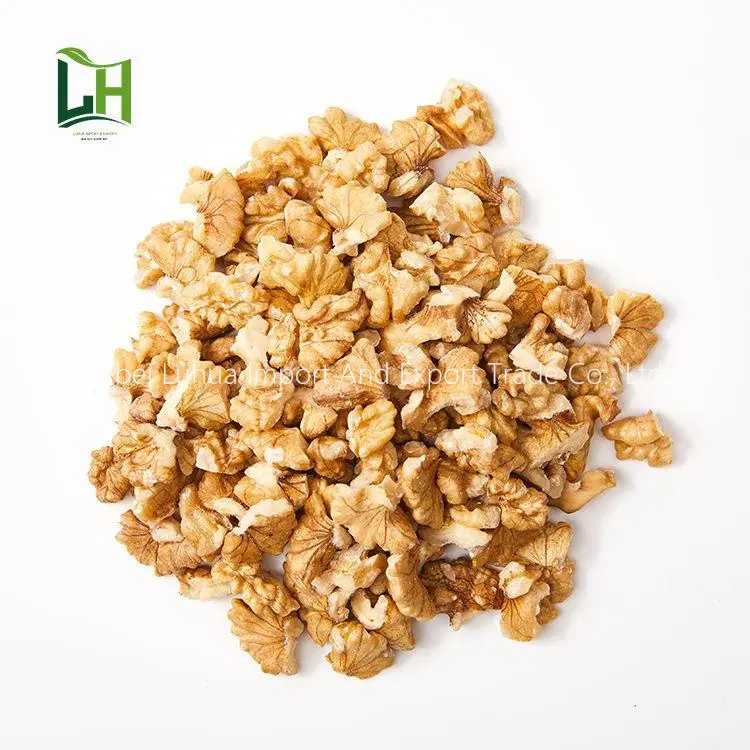
Demand for Peeled Walnuts is rising in bakery, snack, and plant-based dairy—especially in Asia and the Middle East. Buyers ask for lighter color grades, smaller calibrated pieces for bar inclusions, and aflatoxin-managed lots with rapid certificates. Actually, the smallest calibrated kernels are winning because they blend evenly in protein bars without wrecking texture (many customers say this reduces “random crunch” complaints by a lot).
How they’re made: materials, methods, testing
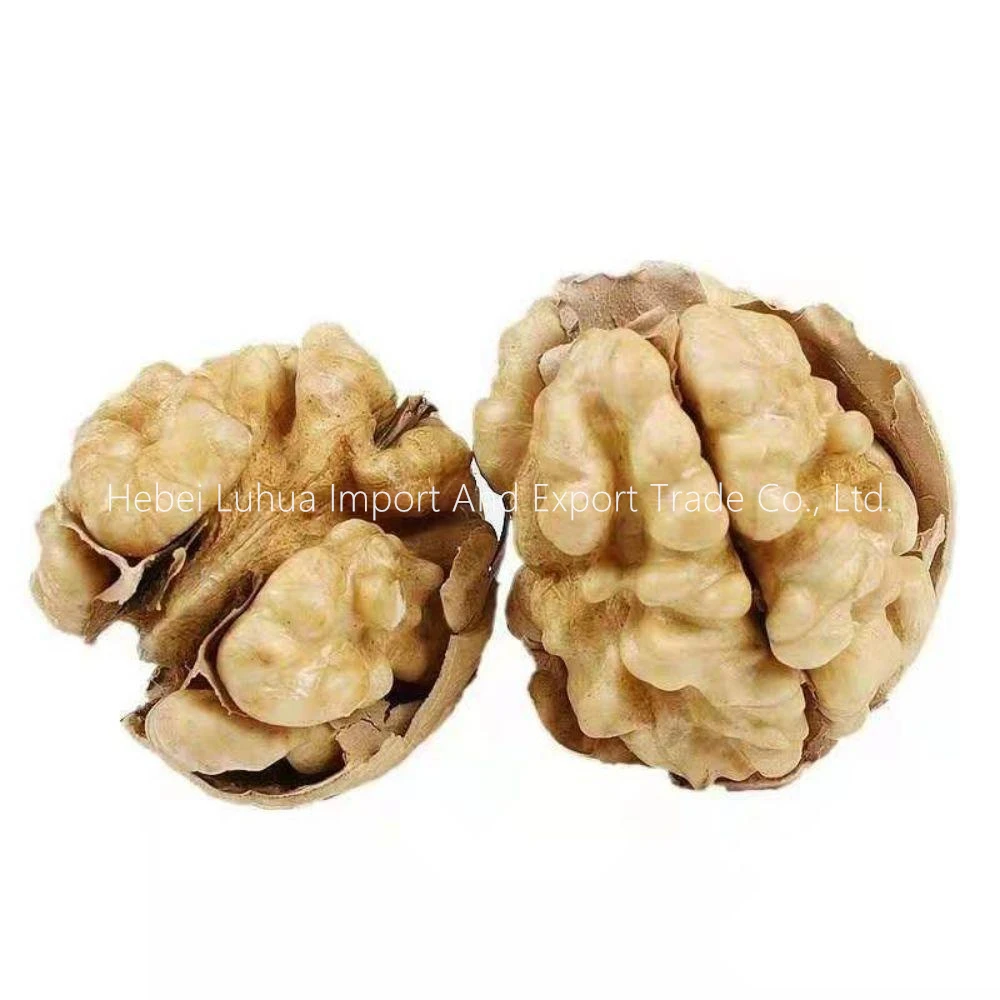
Materials: Juglans regia kernels sourced from Zanhuang orchards; incoming lots graded for color and moisture.
Process (simplified): shelling → gentle peel removal → low-temp drying (to be honest, that’s the make-or-break) → color sorting (NIR/CCD) → sieving to smallest grade → metal detection (ferrous/non-ferrous/stainless) → nitrogen-flushed packing.
Testing: moisture (oven method), peroxide value, free fatty acids, sensory panel, aflatoxin (AOAC methods), microbiology (TPC, yeast/mold). Batches get COAs and, on request, third-party ISO/IEC 17025 lab results. Service life is typically 12–18 months under ≤10°C, RH ≤65%, away from light; real-world use may vary if the cold chain is patchy.
Typical applications
- Protein bars and granola: calibrated small kernels reduce cutting drag.
- Bakery: muffins, biscotti, laminated pastry inclusions (less oil bleed than random pieces).
- Confectionery: praline grind and gianduja-style spreads.
- Plant-based dairy: flavor particulates or cold-milled pastes.
- Nutraceuticals: sachets where uniformity matters.
Product specifications (smallest peeled kernel)
| Origin | Zanhuang County, Shijiazhuang, Hebei, China |
| Cultivar | Juglans regia |
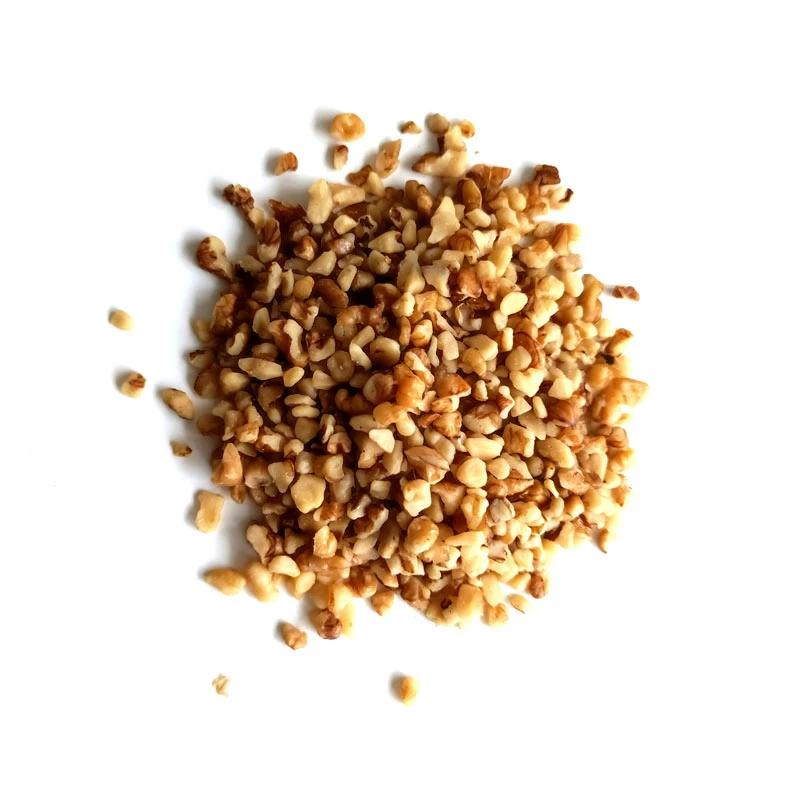
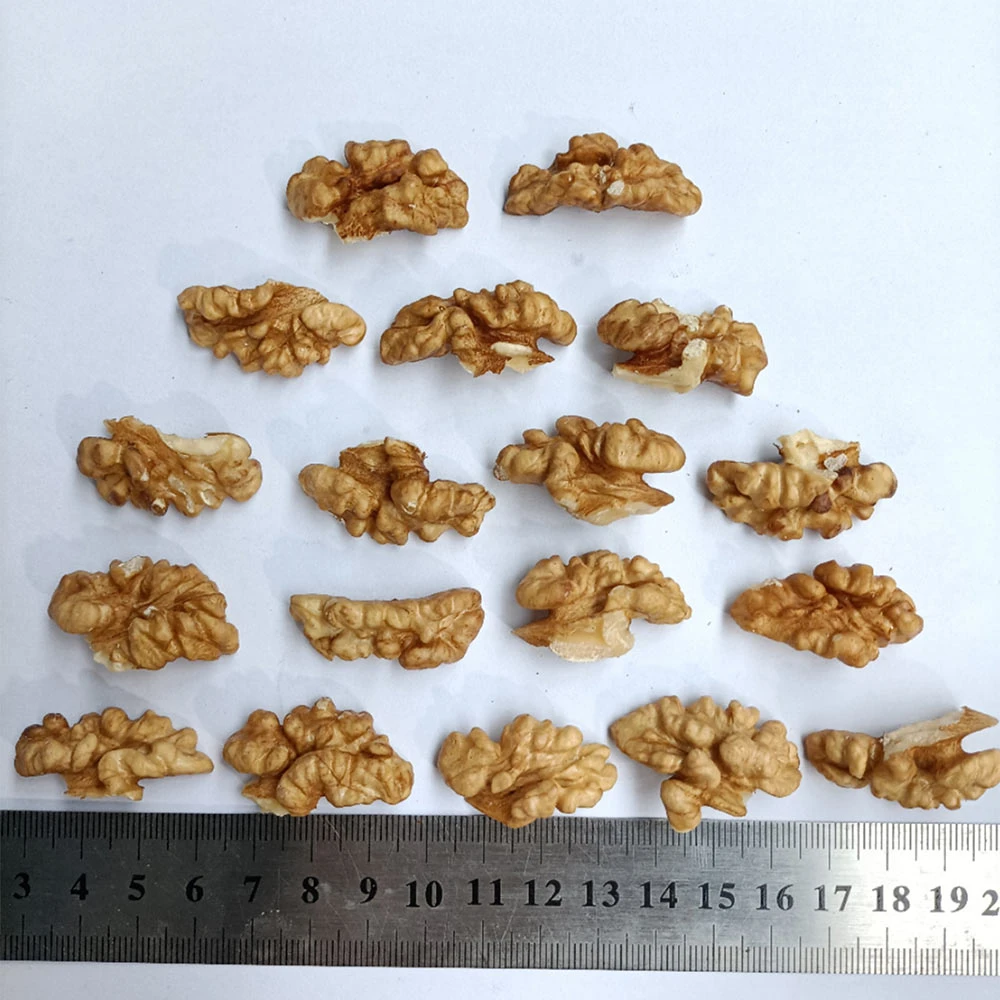
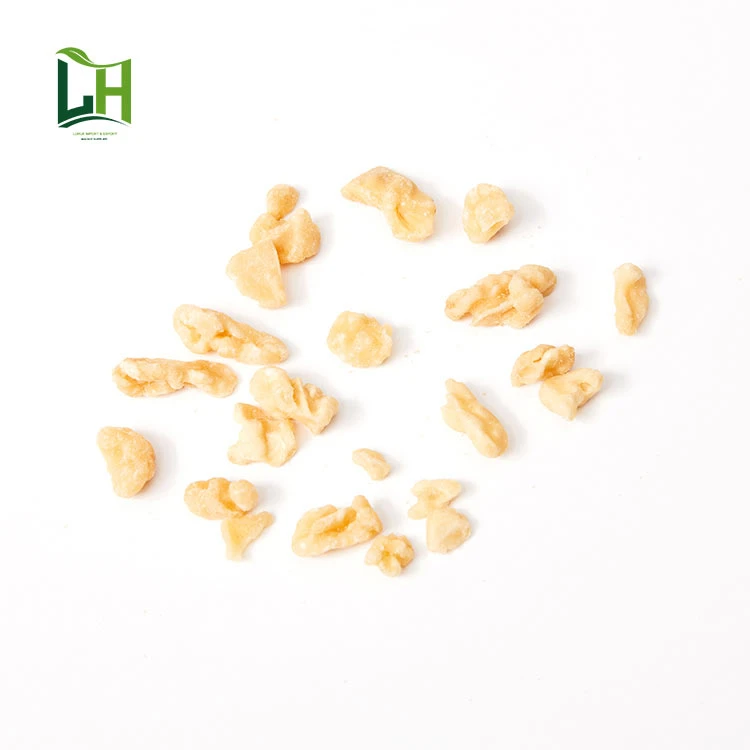
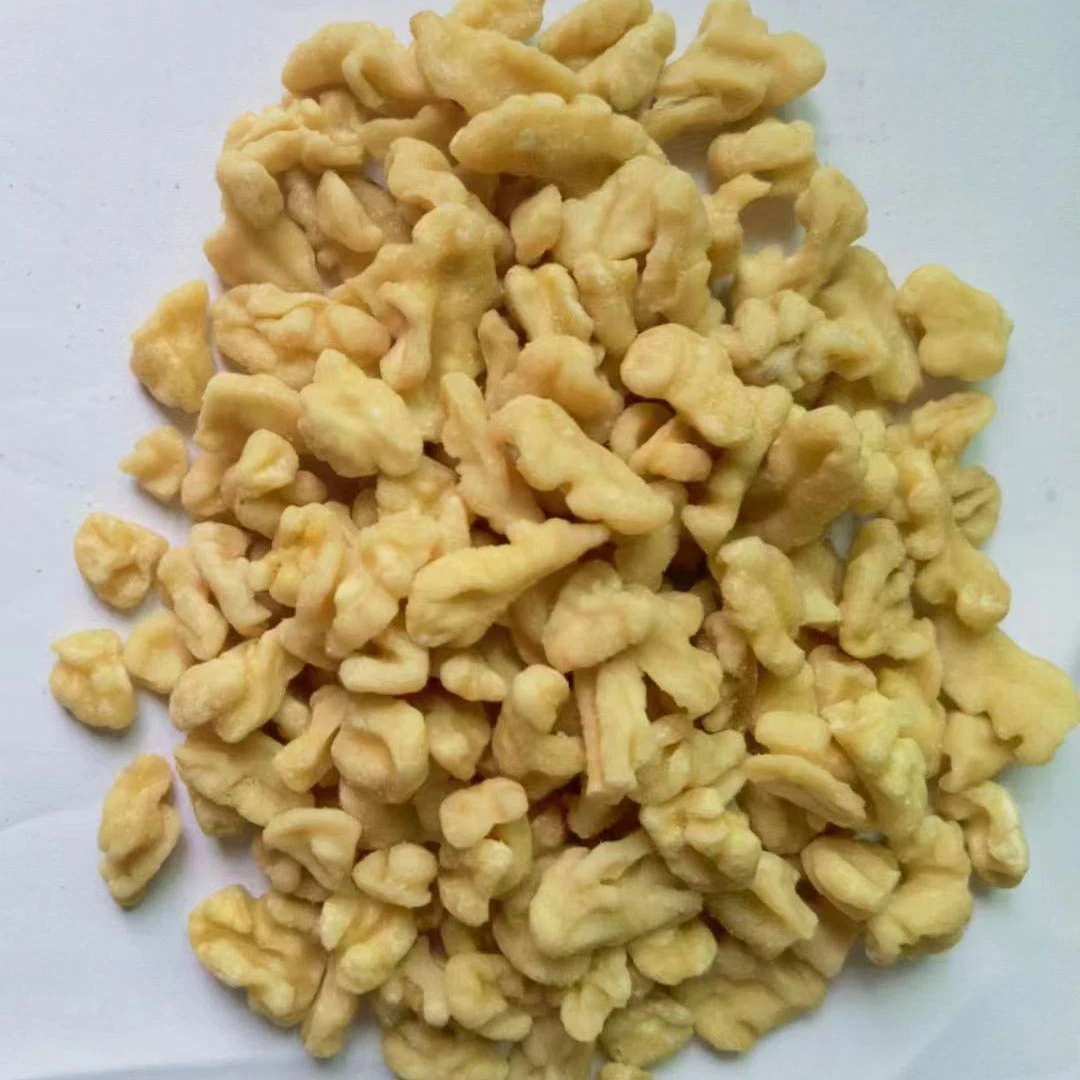
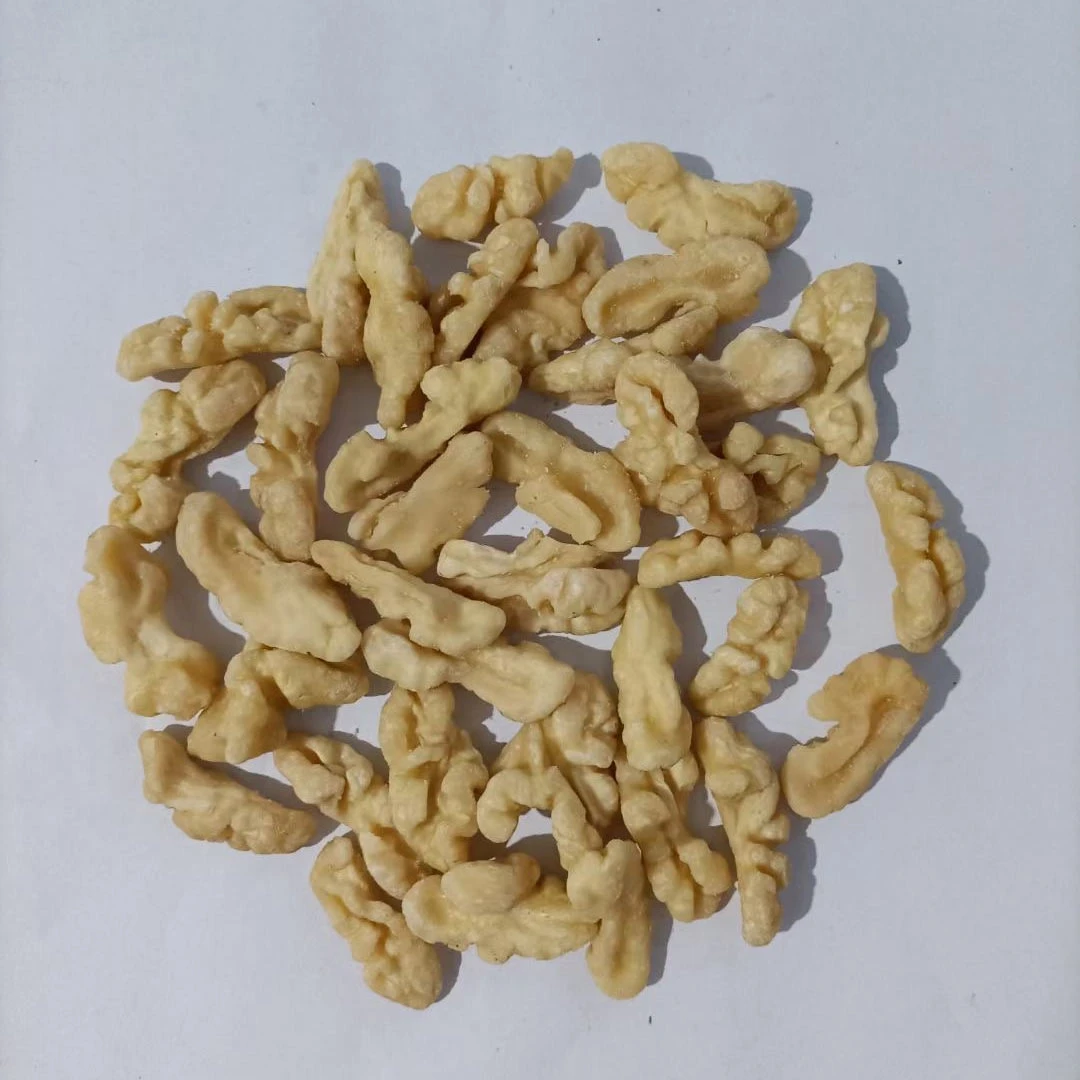
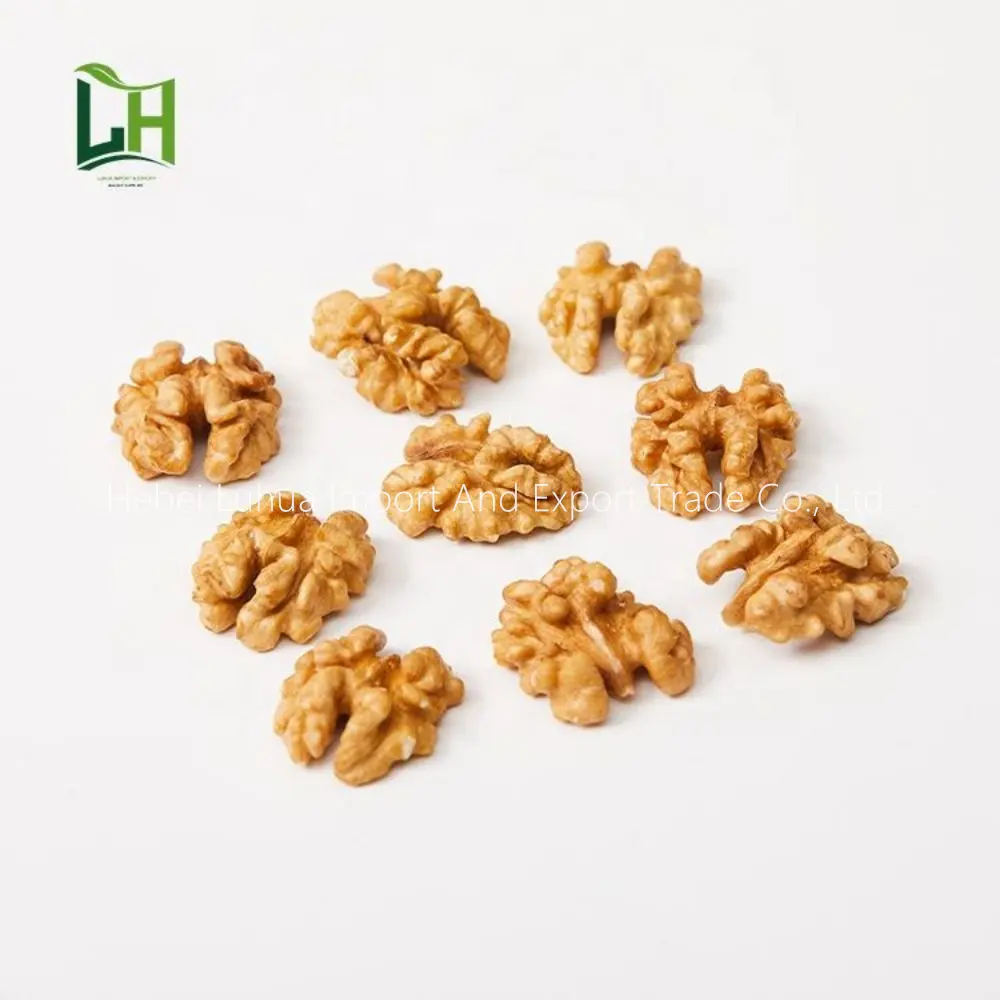
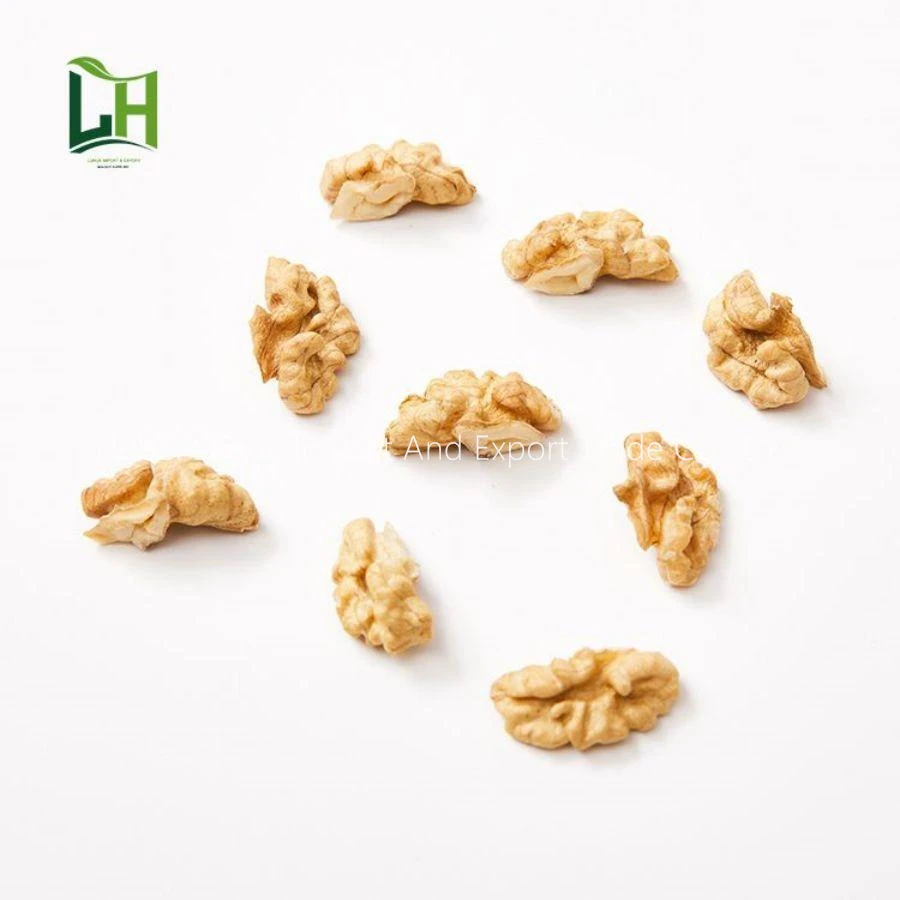
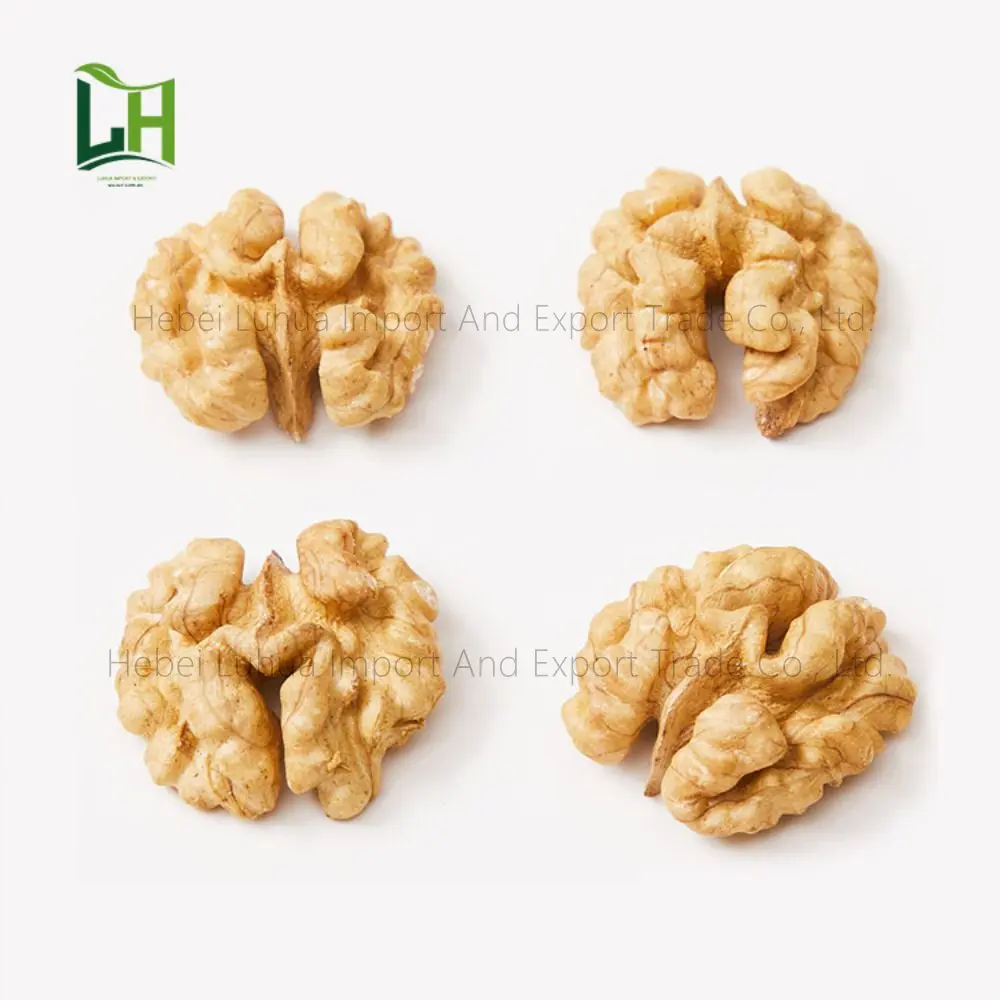
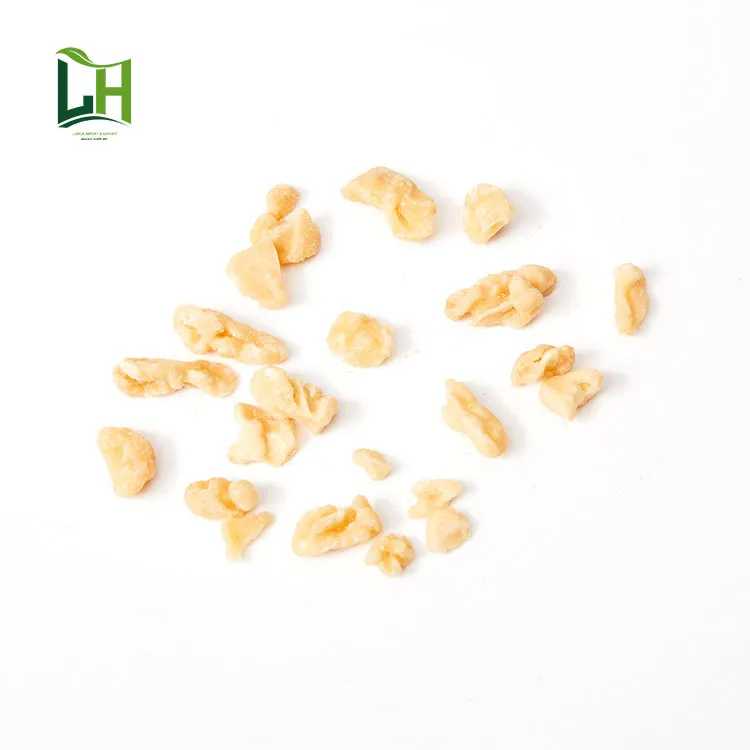
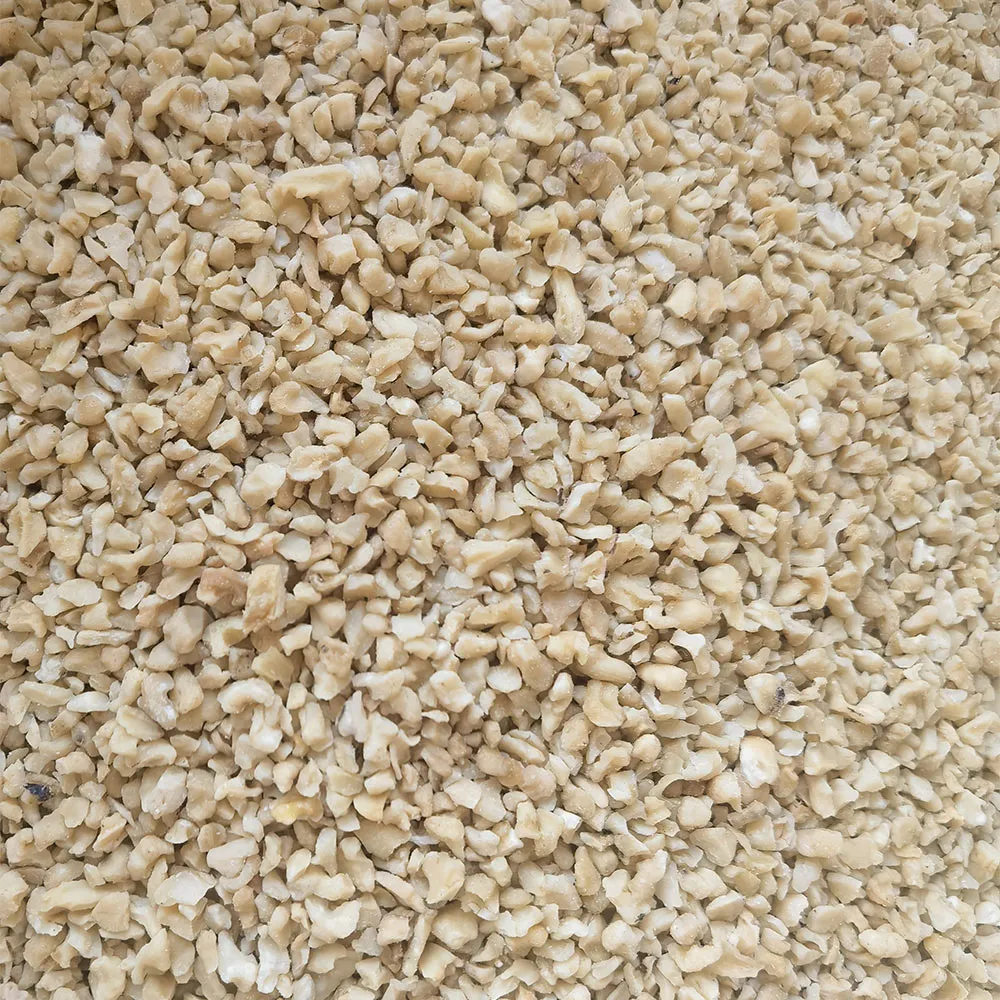
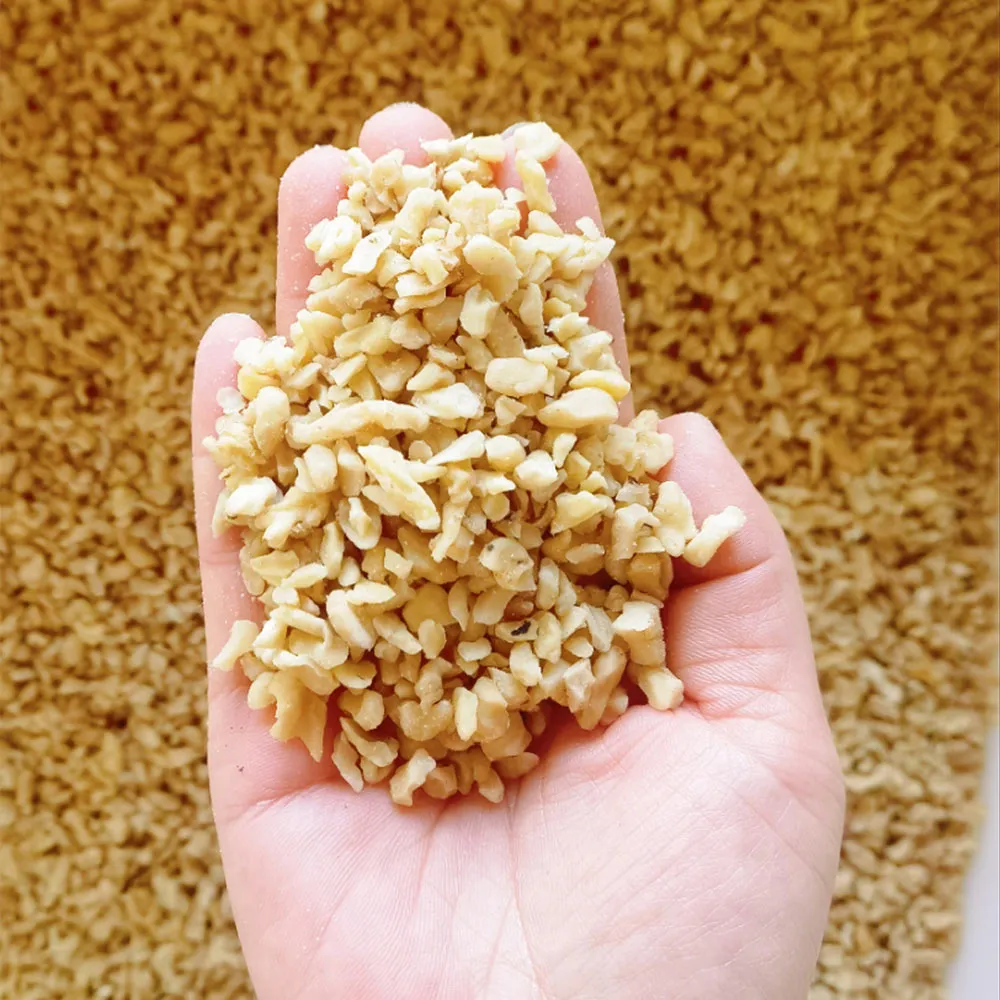
| Grade / Size | Light halves & pieces; smallest calibrated pieces ≈2–6 mm |
| Moisture | ≤4.0% |
| Peroxide Value | ≤2.0 meq O2/kg (typical fresh) |
| Aflatoxin (B1 + sum) | ≤10 ppb typical; tested per AOAC methods |
| Micro (TPC / Yeast-Mold) | ≤1×10^5 / ≤1×10^3 cfu/g (target) |
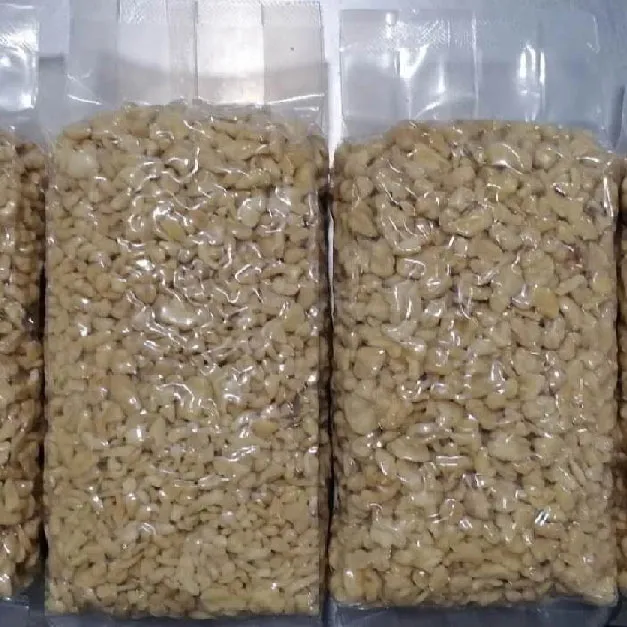
| Packaging | 5/10/12.5 kg vacuum + nitrogen, cartons |
| Certifications | BRCGS Food, ISO 22000/HACCP; COA per lot |
Vendor comparison (indicative)
| Vendor | Certs | Lead Time | MOQ | Customization | Price/MT (≈) |
|---|---|---|---|---|---|
| Luhua Walnut Factory (Hebei) | BRCGS, ISO 22000 | 10–20 days | 1 MT | Size, color, pack gas | $3,000–$3,800 |
| Hebei Co‑op Exporter | HACCP | 15–30 days | 3 MT | Limited | $2,900–$3,500 |
| Anatolian Exporter | ISO 22000 | 25–35 days | 2 MT | Color only | $3,200–$4,000 |
| California Co‑packer | BRCGS | 7–14 days | 500 kg | Extensive | $4,200–$5,200 |
Customization and real feedback
Options include piece size windows, color bands (extra light/light), nitrogen levels, and private label cartons. One European snack client told me their bar yield improved ≈3% after switching to Peeled Walnuts with tighter 2–4 mm sieve control—less blade fouling, fewer edge crumbles.
Mini case studies
- Bakery chain (SEA): standardized Peeled Walnuts pieces cut muffin weight variance by ≈0.8 g per unit—saves dough, literally.
- Confectioner (EU): peroxide ≤1.5 meq/kg on arrival kept praline notes clean after 5 months at 8°C.
- Nutrition brand (GCC): aflatoxin-managed lots with rapid COA cleared port checks in 48 hours.
Compliance essentials
Look for BRCGS or equivalent GFSI certifications, AOAC-validated aflatoxin testing, and alignment with Codex hygienic practice for tree nuts. For exports, ensure labeling meets destination MRLs and, if you ask me, always request a retained-sample policy.
Citations
- Codex Alimentarius: Code of Hygienic Practice for Tree Nuts (CAC/RCP 75-2015).
- BRCGS Global Standard for Food Safety, Issue 9.
- ISO 22000:2018 Food Safety Management Systems.
- AOAC Official Methods for Aflatoxin in Nuts (various; e.g., LC/FLD).
- EU Reg. (EC) No 1881/2006 and FDA guidance on aflatoxin (20 ppb action level).
Post time:Oct . 21, 2025 15:40